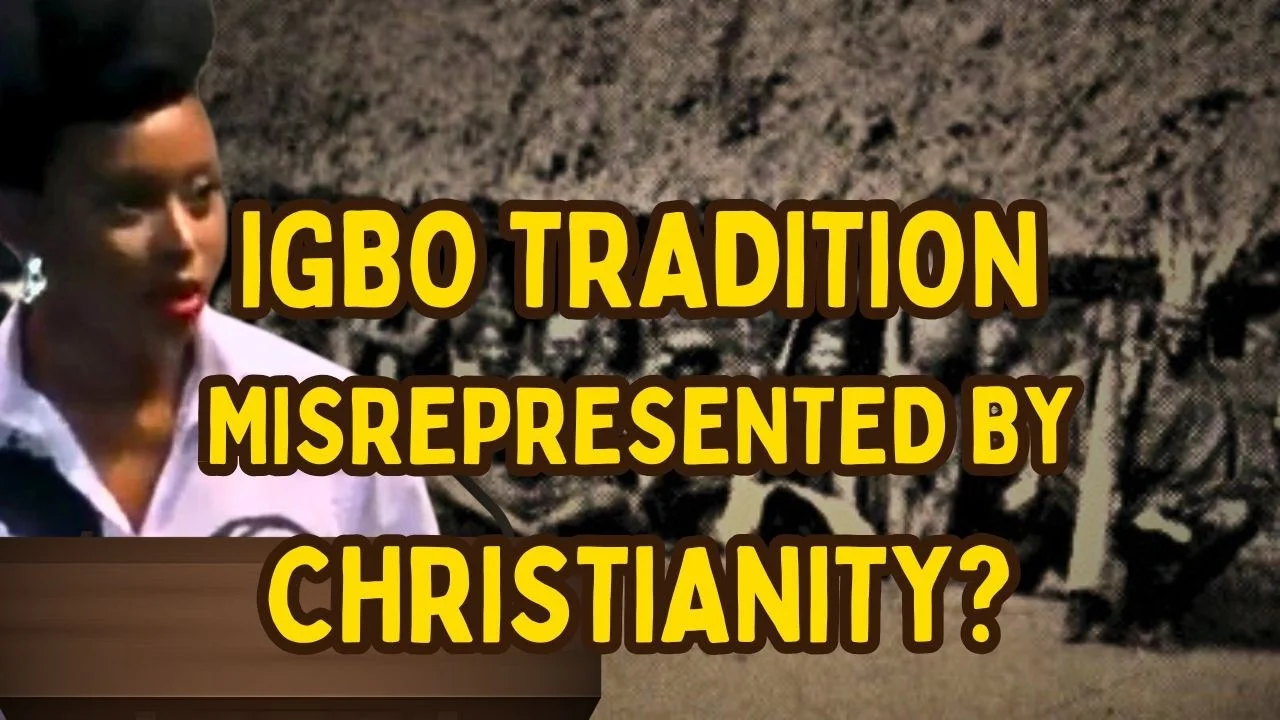
Chimamanda Ngozi Adichie discusses her research into pre-colonial Igbo history, revealing how colonialism distorted cultural practices and the importance of preserving Igbo language and heritage.
Distortions and Changes from Colonialism
•Colonial actors documented Igbo history with their own agendas, often misrepresenting it.•The colonial government banned practices like women's associations punishing men through 'sitting on a man' and declared women could not own land, inventing 'native custom'.•British missionaries imposed their values, such as criminalizing 'indecent dressing' despite pre-colonial women often wearing minimal clothing.Pre-Colonial Igbo Women's Roles and Practices
•Women were traders, could own property, and held positions like the Ọmụ in Onitsha, who controlled market activities.•Practices included woman-woman marriage, Idigbe marriage where children belonged to the woman's kin, and swift divorce (igba nrira).•Women's associations had authority to judge disputes and punish men, showing more diffuse power structures.Preserving Igbo Culture and Language
•Physical remnants like trees and shrines are being destroyed in the name of Pentecostal Christianity, erasing history.•Speaking Igbo is declining, but language is crucial for culture, as seen with the kola nut ritual that requires Igbo.•History should be re-created for dignity, not colonialism, and cultural unity (Igbo bụ Igbo) can foster resilience.Key Takeaways
•Colonialism introduced distortions to Igbo culture, such as banning women's rights and practices, often under false claims of preserving 'true' culture.•Pre-colonial Igbo society offered women significant economic and social roles, including property ownership, trading, and unique marriage systems.•Preserving Igbo language and historical sites is essential for maintaining cultural identity and challenging rigid gender norms inherited from colonialism.Conclusion
Understanding and reclaiming pre-colonial Igbo history empowers cultural dignity and challenges modern distortions.