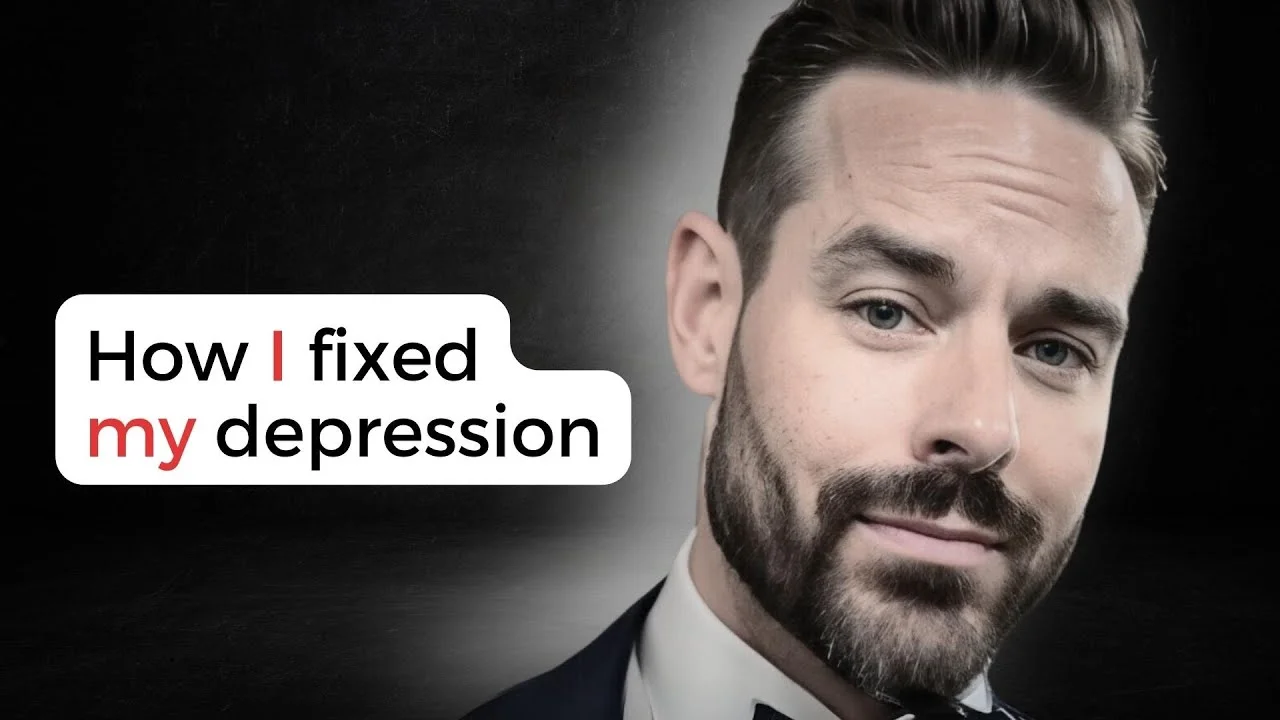
Dr. Scott describes living with depression for most of his life and how his symptoms have changed from being severe most of the time to typically mild and much less frequent. He shares six habits he stopped because he found they were contributing to his struggles or making it harder to care for himself.
His experience with depression and substances ⏱ 0:00
•Dr. Scott says he struggled with depression for all 40 years of his life. During an especially difficult period of about eight or nine years, he estimates he was depressed 98% of the time.•He describes feeling disconnected from the world, struggling to maintain jobs and relationships, and finding it difficult to care about things. He says his depression is now severe about 5% of the time and typically mild, though he does not consider it cured.•The first habit he stopped was using drugs and alcohol. He says substances could temporarily improve his mood, but once their effects wore off, his baseline remained unchanged.•In his experience, relying on that temporary relief reduced his motivation to make changes with longer-term benefits. He notes that addiction may require help to address.Choosing achievement over chasing joy ⏱ 7:17
•Dr. Scott stopped making acute feelings of joy, excitement, pleasure, or reward the main aim of his activities.•He says that during deep depression, anhedonia can make pleasure-seeking activities stop working. For example, playing a phone game may feel enjoyable when he is in a good mood but pointless when he is depressed.•He finds feelings of achievement or accomplishment more durable: memories of doing worthwhile things, helping others or family, and improving his surroundings can remain accessible even when his mood is very low.•His takeaway is that achievement can be a more dependable investment of time than chasing joy during depression.Protecting sleep and nutrition ⏱ 9:52
•He stopped staying up several hours past the time he needs to go to bed. He distinguishes this from insomnia, describing “behavioral insomnia” as choosing to stay awake scrolling, playing games, or watching television when sleep is possible.•He says lack of sleep can leave the mind emotionally dysregulated. He also explains that alcohol and staying up late can trigger spirals that make it difficult for him to function.•He stopped restricting his food intake, including skipping meals. He says depression can make food unappealing, and people may also restrict food for reasons such as body dissatisfaction or feeling undeserving.•He aims to eat three meals and one or two snacks a day, with reasonably balanced meals that include proteins, carbohydrates, and fats.Moving regularly and limiting fantasy-world immersion ⏱ 13:58
•Dr. Scott stopped allowing himself to be inactive or spend too much time indoors. He says using his body every day, ideally outside, helps him avoid a mood decline and an insomnia trigger associated with inactivity.•He also became selective about anime, video games, television shows, and movies. He says becoming overly invested in a fantasy world has sometimes led him to wish he could live there or be one of its characters.•Comparing his real life with an unattainable fantasy can leave him feeling hollow, dissatisfied, and unable to appreciate what he has. He therefore sets narrow limits on the media he engages with.•He describes himself as someone who needs to take especially good care of himself, saying that when he does, he can live a great life, but neglecting that care can lead to a serious downfall.Key Takeaways
•Dr. Scott says his depression changed from affecting him about 98% of the time during a difficult period to about 5% of the time in recent years, typically at mild intensity.•He stopped using drugs and alcohol because he found temporary mood relief did not raise his baseline or motivate longer-term changes.•He considers achievement and accomplishment more durable during depression than pleasure or joy.•He avoids staying up late, restricting food, and remaining inactive or indoors for too long; he describes routines of three meals and one or two snacks a day.•He limits immersion in fantasy media because comparisons with unattainable fictional lives have contributed to depressive episodes for him.Conclusion
Dr. Scott’s central message is that managing his depression requires recognizing his own needs and consistently taking care of himself. He says these changes have made a night-and-day difference in his life, while acknowledging that his depression is not gone.