South Africa's persistent racial segregation stems from centuries of colonial and apartheid policies that continue to shape urban landscapes and living conditions today.
Historical Foundations of Segregation
•In the 1600s, Dutch colonization began, followed by British control in the 1800s, with railways built for diamond mining reinforcing economic exclusion of Black regions.•The Natives Land Act of 1913 restricted Black people to 8% of land, pushing them to city edges for labor.•Apartheid laws from 1949-1971, like the Population Registration Act and Group Areas Act, enforced racial classification and forced removals, such as in District Six.Post-Apartheid Challenges and Legacy
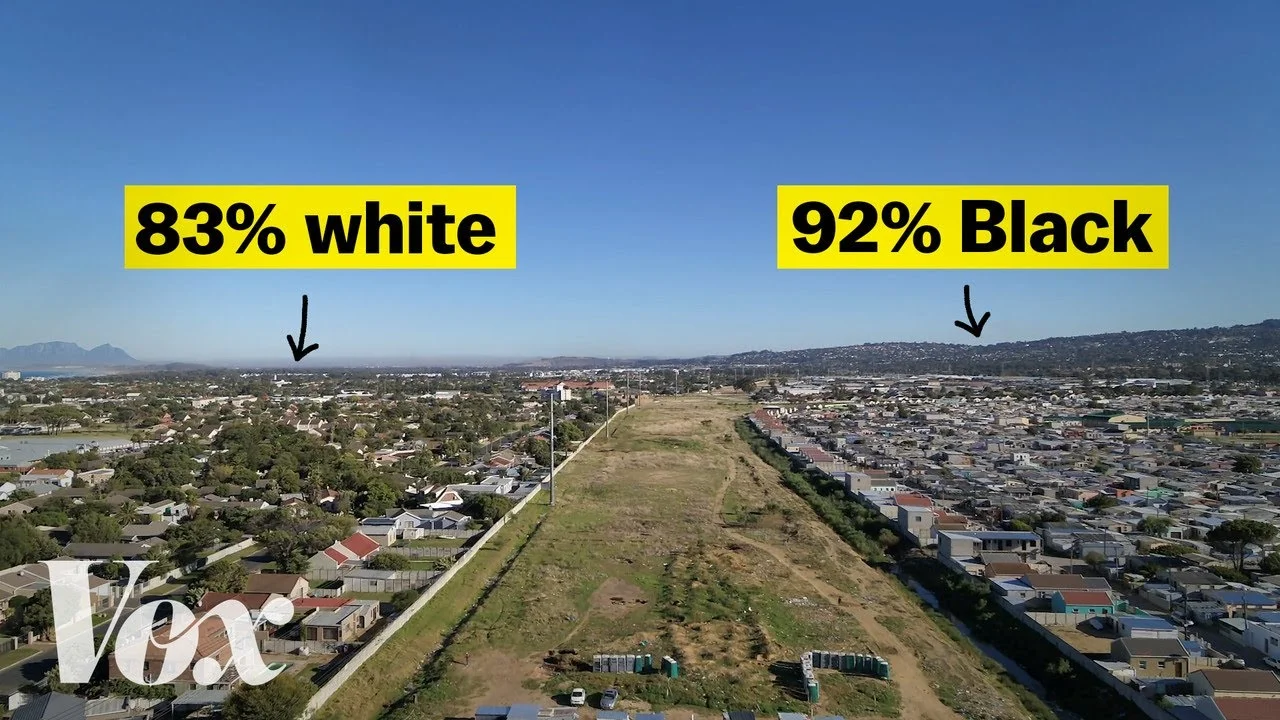
•After apartheid ended in 1994, migration to cities led to township growth on peripheries due to available land.•Public housing programs unintentionally reproduced segregation by building on city outskirts.•Today, 60% of Cape Town's mostly Black population lives in townships with limited services, while city centers see luxury development.Ongoing Struggles and Unresolved Issues
•Former District Six residents have fought against private development, with some returning, but hundreds still await claims.•Psychic scars from colonialism and apartheid persist, with barriers like economic inequality and spatial division remaining.•The legacy of racial division, rooted in history, continues to affect where people live and their quality of life.Key Takeaways
•Apartheid laws and colonial policies, such as the Natives Land Act of 1913, forcibly segregated Black South Africans into townships and homelands.•Post-apartheid urban migration and public housing programs have unintentionally reinforced segregation by developing on city peripheries.•Unresolved intergenerational consequences, including economic disparities and spatial divides, persist despite the end of apartheid.Conclusion
South Africa's segregation is a deeply entrenched legacy of historical injustices that continues to shape modern society.


 0:20
0:20  3:23
3:23 