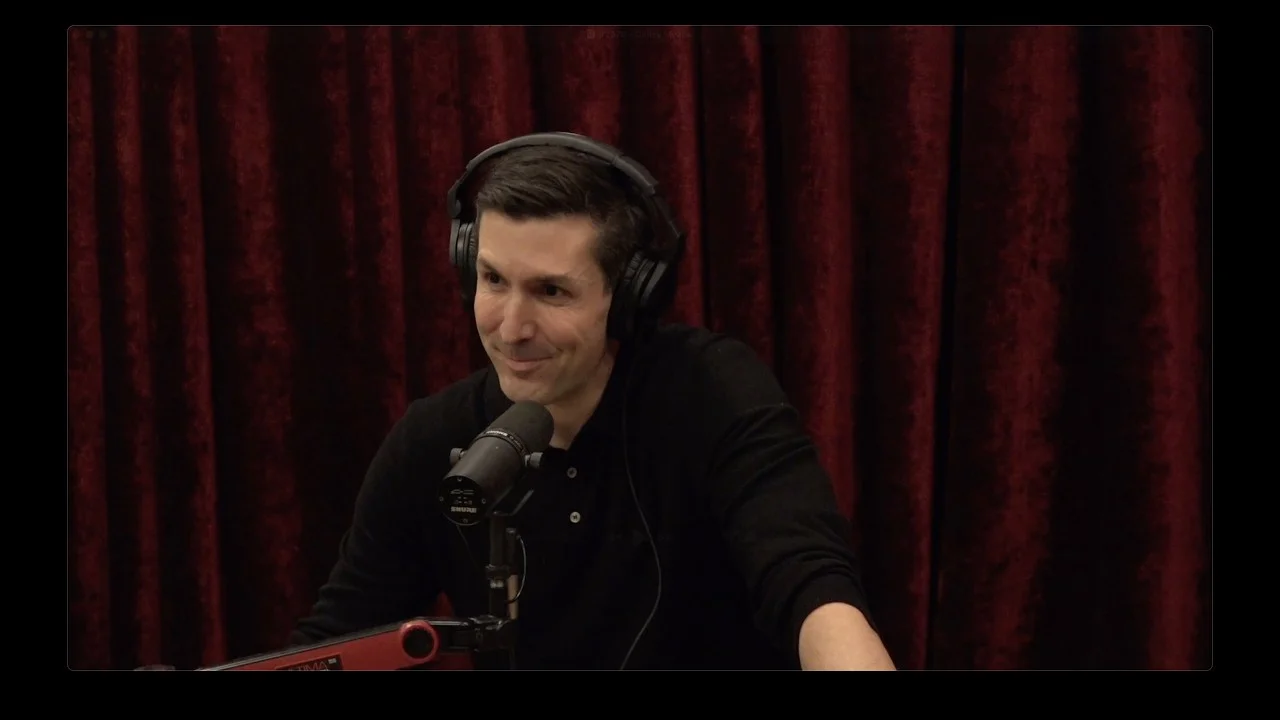
Calley Means discusses his resignation from the White House, the influence of money in politics, and the fight over glyphosate regulation, along with broader issues in food and vaccine policy.
Calley Means on Leaving the White House and the Influence of Money in Politics ⏱ 0:01
•Calley Means resigned from his White House role, citing a concentrated group in the Trump administration antagonistic to the voters' mandate and acting to enrich their families.•He describes a highly centralized White House where chief of staff Susie Wiles controls all policy decisions; her deputies include James Blair, Walker Barrett, and Richard Walters, while pollster Tony Fabrizio must approve every policy issue based on polling.•Means alleges that Wiles, Fabrizio, and others have financial ties to industries they regulate: Wiles took money from Netanyahu, pharma, and pesticides; Fabrizio is paid by Pepsi and pharmaceutical companies; Wiles's daughter worked at Continental Strategies, which grew to about $30 million in revenue, and Blair's daughter at Checkmate; Wiles's former firm Ballard Partners became the highest revenue-generating lobbying firm in history, reporting $98 million.•The midterm strategy was focused on redistricting and gimmicks like no tax on tips and affordability, with Fabrizio dismissing food and pesticide issues as not a big part of their strategy; Means says polls show corruption is the top issue for Americans.•Means stresses this is a structural, bipartisan problem, not unique to Trump, and that many good people like Bobby Kennedy are in the administration but are exasperated by these dynamics.The Glyphosate Fight and Liability Protection ⏱ 22:04
•Calley says American children are the sickest in the developed world, hitting puberty 2 to 3 years earlier than 50 years ago, with the highest rates of autoimmune conditions, hormone conditions, pediatric cancer and diabetes in human history; the US is 4% of the world's population but uses 20% of its glyphosate and pesticides by some measures, and spends half as much of national income on food as Europe but 3 times more on healthcare.•A poll by Tony Fabrizio found 92% of Republicans want pesticides regulated; Trump promised at the endorsement ceremony to look into and clean up pesticides. Getting the word glyphosate into the MAHA report triggered the greatest fight of Calley's life, with industry calls to Susie and everyone else; the EPA has not reviewed glyphosate in close to 30 years, and the last review was thrown out after court revelations that Bayer ghost-wrote the research and bribed EPA officials.•Bayer pushed state-by-state immunity laws, then tried to jam it into the farm bill; it would make glyphosate the second product after vaccines you can't sue over. Susie's aide Walker Bear handed Calley an executive order calling glyphosate a national security issue with liability protection, saying it was final, out the next day, and not up for discussion; Susie then called Bobby's office with the same message.•At the same time, Heidi Overton (now up for FDA commissioner) worked with the Department of Justice on a legal argument for liability protection without consulting Bobby; DOJ brought in lawyer Sarah Harris from Bayer's main law firm to the solicitor general's office. The Supreme Court took the case and sided with Bayer. Trump later reacted to the decision saying "It's a terrible idea. How the hell did this happen?" and didn't know his DOJ had supported it.•Calley cites the case of Ardan Allison, a Tennessee teen drenched in glyphosate while working on a cell tower crew who developed one of the worst cases of Hodgkin lymphoma his doctor had ever seen and fought a 7-year battle; Iowa and Kentucky have the highest cancer rates of any geographic location in the world.Unelected Power and the Pattern Behind It ⏱ 37:02
•Calley argues the glyphosate case is a case study of a broader problem: the chief of staff's office, USDA leadership and industry lobbyists slowing or blocking policies voters were promised, with Bobby Kennedy cut out of policy processes.•He says Trump's instincts are right — he wanted to go hard on investigating vaccines, but Tony Fabrizio (paid by pharma) produced a poll calling it unpopular and Susie's world put a full halt for a year on any vaccine inquiry until the president busted it up, as he did with the psychedelic issue.•Calley's core objection is not banning glyphosate — 99% of corn and 98% of soybeans are sprayed with it, and he accepts it can't be banned tomorrow — but removing legal recourse: in a free market people must be able to sue over harm and externalities, and cutting that out is an assault on the market, leaving moms whose kids have cancer unable to sue.•He says mass public opinion is overwhelmingly against liability protection (roughly 95% in a countrywide vote), yet unelected people pushed it through the Supreme Court without the president knowing; the industry's other major pressure was simply preventing the issue from being studied, with threats to appropriations if anyone looked into it.Glyphosate, Regulatory Capture, and the Political Fight ⏱ 40:02
•Glyphosate is a key example of a rigged system: the EPA has not reviewed it in 30 years, and the last review was thrown out for ghostwritten research and bribery. The Supreme Court case hinged on legal technicalities about EPA supremacy, but it only proceeded because a DOJ memo pushed it.•Global annual spending on glyphosate-based weed killers is estimated at 6.8–12.4 billion dollars, and 99% of US corn depends on it. The industry lobbies aggressively, and small agriculture states are overrepresented in the Senate; both Republican and Democrat candidates in Iowa ran on opposing liability protection and addressing cancer rates and water quality.•Calley Means argues the problem is not about banning anything but about legal recourse—a 95% issue—and that this is one of thousands of similar cases. He worries that without an anti-corruption plan, voters will turn to socialists, and claims the Republican party lost the midterms because it was discordant with what was run on two years ago.•He says Susie Wiles created historic top-down control, approved deputies to collect hundreds of thousands from a foreign government, told him 'I need the money from the sugar people to win the midterms,' and that Trump was caught off guard by the foreign payments but may not fully understand the micro stories.Structural Reform and the Way Forward ⏱ 48:20
•Calley Means calls for a one-page constitutional amendment to get corporate money out of politics, passed only if a president runs on it as a central campaign promise, takes it to Congress on day one, refuses to sign other bills until it passes, and shames Congress into acting. He says the founders were deeply skeptical of human nature and would be shocked at how few amendments have been made.•He argues senators spend 90% of their time fundraising, that the 17th amendment's direct election of senators was a disaster, and that money matters less than voters and message. He claims Congress will pass nothing on its own and that structural reform requires presidential leadership.•He says Bobby Kennedy is the most popular public official in America according to a Harvard-Harris poll and the most popular figure in the Republican party, and that Democrats are stupid to attack him. He notes that when he left, stocks of major junk food companies went up 8% after battles over school lunches.•He argues the Republican party must become an anti-corruption party and that you cannot have a free market without fighting corruption first. He believes Trump could still course-correct by removing lobbyists from the White House, and that there are good people who would not sell him out. He says the only two routes to institutional reform are a president jamming it through as a top priority or the constitutional route.Institutional Reform and the Revolving Door ⏱ 60:03
•States can bypass Congress: if two-thirds of states vote for a constitutional convention, they can pass amendments without the federal legislature.•Calley Means argues Trump can still save his presidency by changing staff, fighting the swamp, and possibly working with Democrats; but without real institutional reform, the two parties will keep ping-ponging with a broken system and no populist bill has taken on special interest in 20 years.•The revolving door is endemic: 19 out of 20 people Means worked with at HHS will be lobbyists for the interests they were trying to fight the day after they leave; every single person Bobby Kennedy works with on healthcare policy, with maybe one or two exceptions, will work for the industries Kennedy is fighting the day they leave.•Examples: Eli Lilly CEO Dave Ricks is in DC all the time having dinner with mid-level White House staffers; one such staffer left the White House and became a lobbyist. Courtney Nup, a National Security Council staffer, drove a glyphosate executive order with Susie, then left to become CEO of the soybean board, a glyphosate lobbying group.Glyphosate, Cancer, and the Need for Structural Change ⏱ 66:38
•The glyphosate EO argued that elemental phosphorus is needed for munitions, but also stated glyphosate-based herbicides play a critical role in maintaining America's agricultural advantage; Means calls the national security argument a joke and says the EO was written by Bayer.•There was no public signing and Trump may not have known about it; Susie's staff told Means it was final and that Bobby should not push anyone, and Susie called Bobby's office saying don't litigate this.•Means says the system is addicted to glyphosate, Europe uses much less and is phasing it out, and other major regulatory authorities recognize the cancer link; HHS was pressured not to study glyphosate before the EPA review.•Iowa has the second-highest cancer rates in the country (Kentucky is first); a map of glyphosate use almost identically matches a map of cancer in the US. Non-Hodgkin lymphoma is a major cancer linked to it. Farmers are starting to realize this.•Regenerative farming is possible—John Lundren and Will Harris converted their farms—and several billion dollars moved from the USDA to promote it.•Means recommends Trump clear his house: go to war with Congress and the Senate, stop trying to make friends with John Thune, and meet with new lefties like Barney and Elsa who ran on a Trump-like message. Trump's staff of 2 million people is compromised; career officials circulated a CIA manual on how to be a bad bureaucrat and subvert from within. Means believes Trump wants to empower Bobby and the change makers, and there is opportunity in the next two years.Psychedelics and Institutional Resistance ⏱ 80:03
•Psychedelic reform is advancing but faces institutional resistance; President Trump is engaged, yet the infrastructure tries to "wait us out" and bog down implementation.•Heidi Overton, now FDA commissioner nominee, and others at the White House equated psychedelics with street drugs and stalled progress, despite the president's campaign promises.•Calley Means called the president directly about ibogaine and psychedelics for veterans and addiction, which White House staff decried as an "end run" of the policy process.•Means argues psychedelics could be one of the greatest accomplishments of the Trump administration, citing the addiction crisis and research showing effectiveness.Food Policy, Vaping, and mRNA Vaccine Review ⏱ 87:14
•Food policy wins: soda removed from SNAP in 30 states (California and Texas among them), landmark food safety reform, and efforts against ultra-processed foods. 38% of teens have pre-diabetes, 45% of teens are overweight or obese, 20% of young adults have fatty liver disease, almost 80% of American adults are obese or overweight.•Vaping: about 50% of high schoolers vape; 70% of kids say they wouldn't vape without flavors. James Blair made fruit-flavored vape approvals the top HHS issue, arguing it was a core midterm issue; Marty McCary was fired after standing his ground, and Heidi Overton then relaxed standards, prompting a lawsuit from the American Heart Association.•Moderna's mRNA flu vaccine application was sent back by the FDA: the study used an antiquated vaccine for comparison, showed only 8% absolute risk reduction, and had a significant side effect profile including deaths in the trial group. Marty pushed for another study amid unrelenting pressure.•Means describes a pay-to-play DC playbook: special interests donate to firms like Ballard and Continental (Susie Wiles' daughter) and Checkmate (Chris Vitta's son) to influence policy, and says staffers like Heidi Overton broke with Marty because he refused to bend on scientifically sound decisions.Vaccine Policy, Regulatory Capture, and the Kratom Loophole ⏱ 100:03
•Calley Means recounts how a vaccine was approved despite FDA concerns, due to political pressure and a former Merck Vaccines head leading a "sham advisory committee". He argues liability protection and the "vaccine" label shield products from scrutiny, and that the left has lost the vaccine debate.•Means claims Tony Fauci blocked vaccine studies and that Trump unblocked them; he cites Fauci's website listing pharma funders including Pfizer and says every cabinet leader works to get his approval.•On kratom, Means says it is an opioid sold legally in gas stations, with a $3 billion industry and skyrocketing addiction and deaths; the FDA initially set a tolerance limit of 0.05% of the core compound, but lobbying led to a 20x increase, which he says will cause death.•He criticizes lobbying by the vaping industry, estimated at $24 billion globally in 2026 and $6 billion in US tracked retail in 2025, and notes that David Kessler's FDA petition to investigate sugar and refined carbohydrates in children's diets was blocked because Susie Wiles said the sugar industry money was needed for midterms; Means questions why these policies aren't pursued now that midterms are over.Blame-Shifting, Money in Politics, and the Cost of Broken Policy ⏱ 120:04
•Means disputes the post-election narrative that microtargeting, ad money and redistricting won it, arguing the coalition and populist messaging were dismissed while Trump himself won; he says post-election midterm paralysis gripped the administration about 6 months after the term began and is "based on a lie."•He questions a system where senators spend 90% of their time fundraising from corporate donors, calls the place "demonic," stresses the problem is bipartisan (Dems do the same), and urges structural reform so the next two years can still deliver for a president he believes wants to be historic.•Means tells of Suzy Wills allegedly shutting down oversight conversations and saying "we are going to win" while advisers say no one thought so; he describes staffers in crisis mode throwing Trump under the bus when many fingers point back at them.•He cites Obamacare as written by the insurance industry: premiums up 1.5x since, healthcare now 25% of the US economy, insurer stocks up 15x, and the US spends 3 times more than any other country yet lives less than any developed nation.•He accuses figures like Wills of using money as an excuse to be antagonistic to voters' wishes — favoring gas station heroin, vaping, pharma and glyphosate over healthy food — and notes 70% of a child's diet in the US is ultraprocessed food versus 10% in Spain.The Vaccine Study Reversal and the Failed Ultraprocessed Food Definition ⏱ 125:42
•Means praises Vinay Prasad and Marty Makary for an elegant COVID vaccine solution: when Pfizer's model was reapproved, approval was conditioned on Pfizer running a real safety/efficacy study it hadn't done in a long time; after Makary was fired, the FDA told Pfizer it no longer had to do the study, which Means suspects is because they knew it would show bad things.•He says such reversals require a directive from the top, alleges Pfizer worked hard to avoid the results, insists he never saw Bobby Kennedy put his finger on the scale, and describes DC as a Byzantine machine where industry CEOs and former pharma staff have deep FDA relationships.•The breaking point was the administration agreeing to release an ultraprocessed food definition (covering colors, non-nutritive sweeteners, and factory-derived chemicals on an FDA list) that he aligned with left, right, and center, plus Harvard, Tufts, the American Heart Association, the American Academy of Pediatrics and the American Medical Association.•The definition wasn't tied to regulation, yet drew intense lobbying: an Oreo lobbyist from Mondelez told him "we don't want it done, this will hurt our business" and threatened to call Mark Pincus and Susie; Brooke Rollins agreed, then it was "delayed, delayed, delayed," and Wills told them "you're doing great, I don't know about any special interest concerns" before complaining about MAHA behind their backs.•On school lunches, after 6 months and hundreds of meetings across OMB, USDA, HHS and the NEC, they proposed banning sugary desserts at breakfast and adding a protein requirement; he notes the number one school breakfast is donuts and sugary pastries, with tens of millions government-funded daily, and that the US spends more than any other country on school lunches yet compares embarrassingly to Japan.•Though optimistic that the journey continues, he concludes that with Kennedy the most popular figure in America and this the most popular part of domestic policy, blocking it and being lied to his face made telling the truth the best thing he could do.Key Takeaways
•Calley Means resigned from his White House role, citing a concentrated group in the Trump administration that was antagonistic to the voters' mandate.•He argues that American children are the sickest in the developed world, hitting puberty 2 to 3 years earlier than 50 years ago and having the highest rates of autoimmune disease.•Means claims the EPA has not reviewed glyphosate in 30 years, and the last review was thrown out for ghostwritten research and bribed scientists.•He calls for a one-page constitutional amendment to get corporate money out of politics, which could be passed by a constitutional convention if two-thirds of states vote for it.•Means states that soda has been removed from SNAP in 30 states, including California and Texas, and that there has been landmark food safety reform.•He praises Vinay Prasad and Marty Makary for a COVID vaccine solution: when Pfizer's model was reapproved, approval was conditioned on Pfizer running a study.•Means disputes the post-election narrative that microtargeting, ad money, and redistricting won it, arguing the coalition and populist messaging were dismissed.•He recounts how a vaccine was approved despite FDA concerns due to political pressure and a former Merck Vaccines head leading a sham advisory committee.Conclusion
Calley Means outlines his concerns about regulatory capture, the influence of money in politics, and the need for structural reforms in health and food policy, sharing his experiences from within the White House.