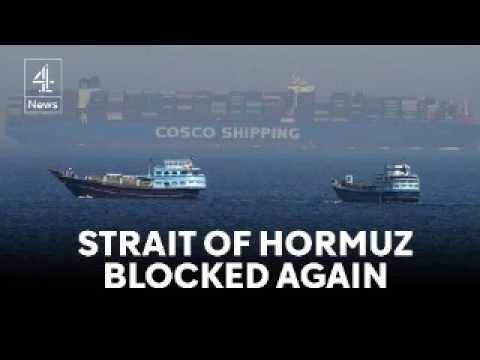
Following Israeli strikes in Lebanon that killed hundreds, including civilians and Hezbollah operatives, Iran has renewed its blockade of the Strait of Hormuz, escalating tensions amid a fragile US-Iran ceasefire and international diplomatic pressure.
Israeli Strikes and Aftermath in Lebanon
•Israel conducted a 10-minute assault on residential areas in Beirut, killing 200-300 people, with Israel claiming 200 were Hezbollah terrorists, including the personal secretary to Hezbollah's leader.•Lebanese civilians expressed shock and grief, with reports of entire families lost and neighborhoods like Ras Beirut, known for its diversity, being targeted unexpectedly.•Israel used a new intelligence tool to track Hezbollah operatives, timing strikes to maximize casualties, in an operation dubbed 'Eternal Darkness' that left Hezbollah stunned.International Reactions and Diplomatic Pressure
•Iran insists Israel's strikes violate the US-Iran ceasefire deal and demands Lebanon's inclusion in peace talks, while the US pressures Israel to end hostilities, with Donald Trump threatening military action if agreements are not upheld.•UK Foreign Secretary Yvette Cooper emphasizes the need for a ceasefire in Lebanon, criticizes Iran's tolls on the Strait of Hormuz as illegal, and stresses diplomatic over military solutions, despite disagreements with Trump.•NATO faces criticism from Trump for perceived failures, with Secretary General Mark Rutter acknowledging frank discussions, as global leaders navigate fragile ceasefire efforts and economic concerns over oil prices.Strait of Hormuz Blockade and Global Implications
•Iran has reimposed a blockade on the Strait of Hormuz, with Trump calling tolls a 'beautiful idea,' but the UK and US oppose this as a violation of freedom of navigation principles.•The blockade threatens international shipping lanes, affecting trade and oil prices, with Gulf countries and global economies at risk, prompting military planning but prioritizing diplomatic pressure.•Iran seeks compensation for war damages, arguing for tolls to rebuild, while international actors stress the need for inclusive peace agreements to ensure regional stability.Key Takeaways
•Israeli strikes in Lebanon caused significant civilian casualties and targeted Hezbollah, leading to Iran's renewed blockade of the Strait of Hormuz.•International pressure mounts as the US-Iran ceasefire is tested, with Trump threatening military action and the UK advocating for diplomatic solutions over conflict.•The blockade disrupts global shipping and oil markets, highlighting the fragile nature of Middle East peace efforts and the need for inclusive agreements.Conclusion
The situation underscores the interconnected crises in the Middle East, where military actions, diplomatic tensions, and economic disruptions converge, demanding urgent and coordinated international responses.