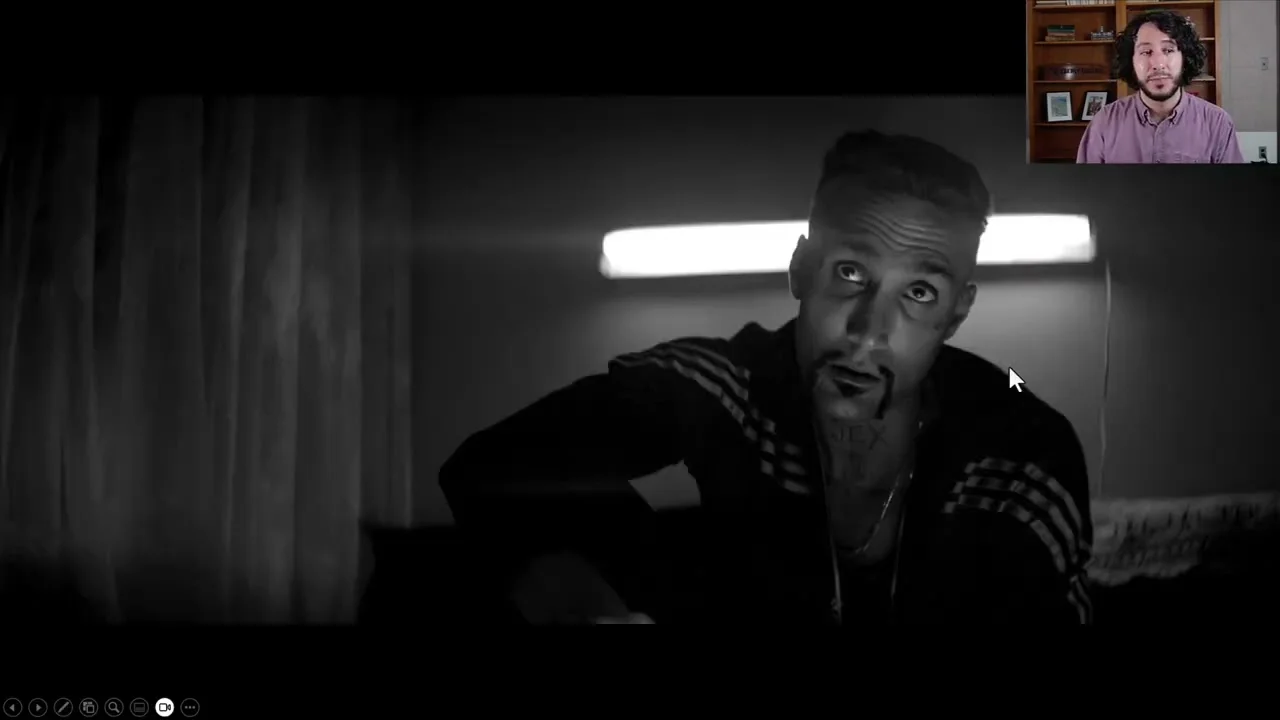
This lecture analyzes how the film 'A Girl Walks Home Alone at Night' subverts horror genre tropes and interrogates the socially constructed category of 'girl'.
Subverting Horror Tropes and the Male Gaze
•The title sets expectations for a vulnerable victim narrative, but the protagonist 'the girl' is the hunter, not the prey, reversing the male gaze.•The film disrupts the 'final girl' trope, where survivors are typically virginal or 'good girls,' by presenting a vampiric killer who actively penetrates and feeds.•It challenges victim-blaming logics common in horror spectatorship, where audiences often criticize female characters for their perceived stupidity or vulnerability.Political and Cultural Commentary
•Set in the allegorical 'Bad City,' the film critiques toxic masculinity and resource extraction, linking male exploitation to environmental harms like oil drilling.•The chador (veil) is reimagined not as a symbol of oppression but as the vampire's cloak, flipping assumptions about Iranian girlhood and agency.•It references transnational feminist critiques, such as Lila Abu-Lughod's 'Do Muslim Women Really Need Saving?,' questioning Western narratives that justify intervention under the guise of saving 'oppressed' girls.Interrogating the Category of 'Girl'
•'Girl' is shown as a socially constructed placeholder meaning vulnerability or victimhood, often infantilizing women, but the protagonist reclaims it through power.•The film draws parallels to historical texts like 'Dracula,' which used fears of the 'Orient' to police white female purity and justify imperial expansion.•It avoids clear moral messages, instead asking viewers to reflect on their own assumptions about girlhood, feminism, and cultural representation.Key Takeaways
•The film inverts horror conventions by making 'the girl' a predatory vampire who challenges victim-blaming and the male gaze.•It uses allegory and symbolism, like Bad City and the chador, to critique toxic masculinity, resource extraction, and Western stereotypes about Iranian women.•The category of 'girl' is explored as a contested, politicized concept that can signify both vulnerability and disruptive agency.Conclusion
The lecture emphasizes that the film prompts critical reflection on girlhood, horror tropes, and cultural assumptions without offering definitive answers.