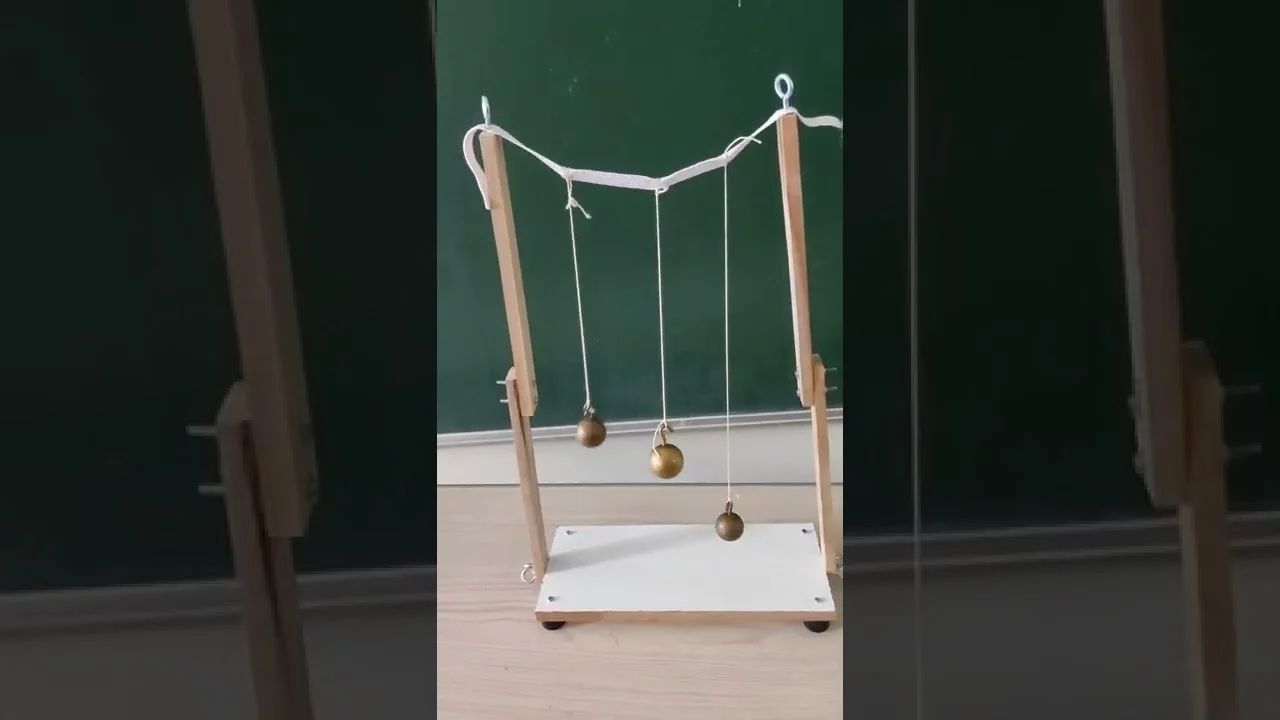
The Magic of Resonance in a Simple Pendulum

Source
en-orig
Sep 21, 2022 Oct 4, 2026
Video preview
Share:

This video explores the concept of resonance through the example of a simple pendulum. The speaker demonstrates how resonance can produce sound and explains the underlying physics.

Understanding Resonance

  • •Resonance is a phenomenon where an object vibrates at its natural frequency.
  • •When external vibrations match the natural frequency, the amplitude increases.
  • •This can lead to the production of sound.
  • The Simple Pendulum

  • •A simple pendulum consists of a weight suspended from a pivot.
  • •It swings back and forth with a specific period.
  • •The period depends on the length of the pendulum and gravity.
  • Resonance and Sound

  • •When resonance occurs, energy is transferred efficiently.
  • •This can cause the pendulum to swing with greater amplitude.
  • •The motion can be converted into sound through various mechanisms.
  • Key Takeaways

  • •Resonance occurs when an object vibrates at its natural frequency.
  • •A simple pendulum has a natural frequency determined by its length.
  • •Matching external vibrations to the natural frequency increases amplitude.
  • •Resonance can lead to the production of sound.
  • Conclusion

    Resonance is a fundamental concept that explains how energy transfer can amplify vibrations and produce sound. The simple pendulum serves as a clear example of this phenomenon.

    Fact-checked with live web search — claims are verified against real sources, not guessed.

    Ask AI about this video

    Visual Highlightsbeta