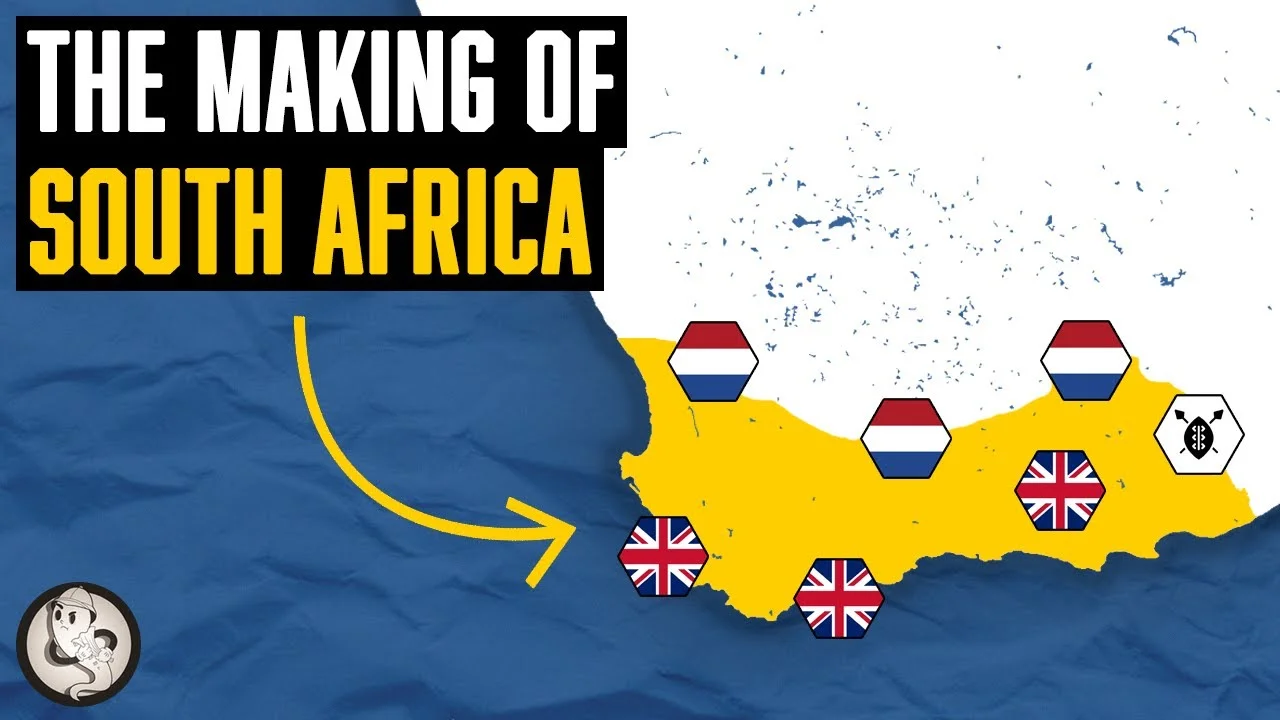
The Cape Colony, established by the Dutch in 1652 as a layover port for Asian trade, evolved into a complex settlement with European settlers, slavery, and conflicts with indigenous peoples, shaping modern South Africa.
Establishment and Growth of Cape Colony
•In 1652, Jan van Riebeeck of the Dutch United East India Company (VOC) established a small outpost at the Cape of Good Hope to serve as a layover port for vessels trading in Asia.•The colony grew quickly, attracting settlers from the Netherlands, Germany, Scandinavia, and Huguenots fleeing persecution in France, and it became an ideal retirement place for VOC employees who could lease land as free citizens.•Labor-intensive farms led to the importation of slaves from Madagascar, Mozambique, and Asia, creating a multiethnic population, with European settlers expanding borders becoming known as Boers, who moved inland to escape VOC control.British Rule and Conflicts
•Cape Colony was occupied by the British in 1795 to prevent French control, and after brief changes, it remained under British rule from 1806, with the slave trade abolished in 1807 and slavery in 1834.•British rule introduced basic rights for Africans but failed to stop settler violence against the San, and tensions arose with Boers over abolition and lack of protection, leading to the Great Trek inland.•The Xhosa Wars (1779-1879) erupted over land disputes, culminating in the cattle-killing movement of 1856-1858, which caused famine and the annexation of the last independent Xhosa state in 1879.Voortrekkers and the Great Trek
•Boers, known as Voortrekkers, moved inland to escape British rule, establishing autonomous Boer Republics and encountering lands depopulated by the Mfecane, a period of forced migration under Zulu King Shaka.•In 1838, Voortrekker leader Piet Retief and others were killed by Zulu King Dingane, leading to the Weenen Massacre and the Battle of Blood River, where Voortrekkers used a laager to defeat the Zulus with no losses.•The Voortrekkers allied with Zulu prince Mpande to overthrow Dingane, established the Republic of Natalia in 1839, which was annexed by the British in 1843, causing many Boers to move northwest.Key Takeaways
•Cape Colony was founded in 1652 as a Dutch layover port for Asian trade, growing through European settlement and slavery, leading to a multiethnic society and the emergence of Boers.•British rule from 1806 brought abolition of slavery and tensions with Boers, sparking the Great Trek, while conflicts with indigenous groups like the Xhosa and San shaped the colony's borders.•The Voortrekkers' inland migration resulted in violent clashes with the Zulu, including the Battle of Blood River, and the establishment of short-lived Boer republics like Natalia, later annexed by the British.Conclusion
The Cape Colony's development from a trade outpost to a British-controlled territory, marked by settler expansion, slavery, and indigenous conflicts, laid the foundations for modern South Africa.