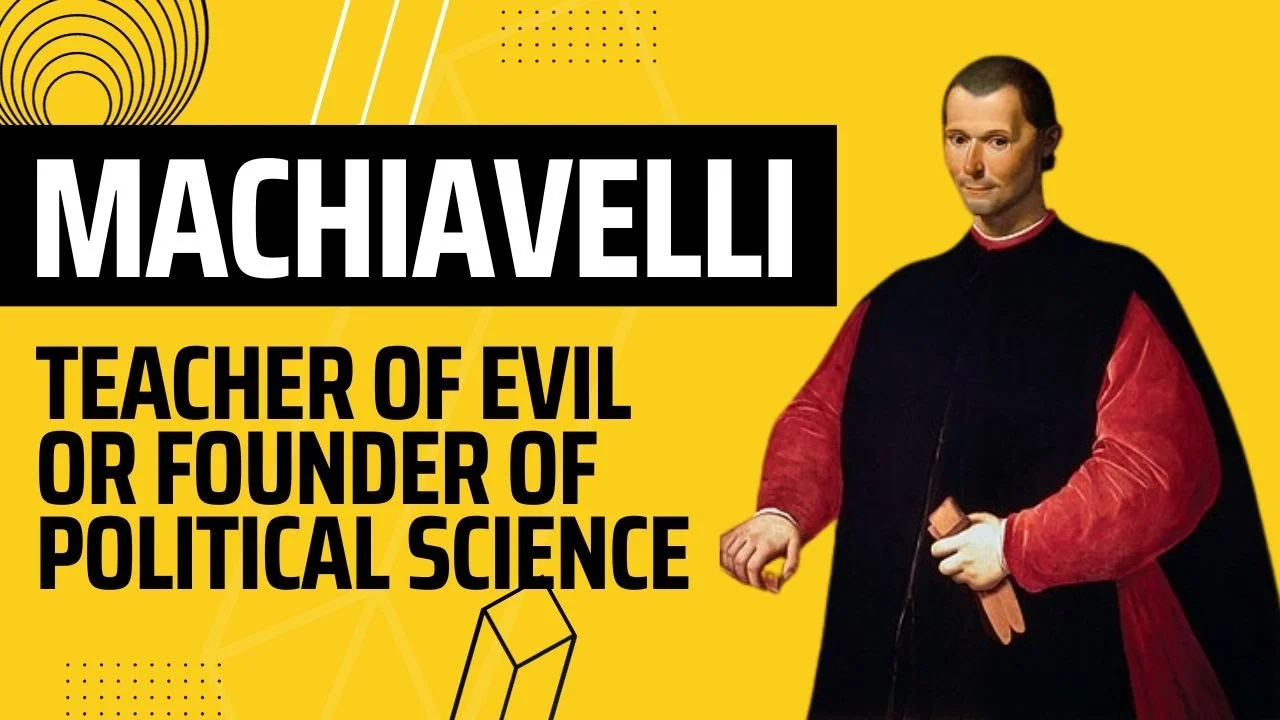
Niccolò Machiavelli, a Renaissance thinker, revolutionized political philosophy by advocating for pragmatic realism over idealistic morality in governance.
Machiavelli's Life and Context
•Born in 1469, Machiavelli was an Italian historian, diplomat, and writer during the Florentine Renaissance.•He served the Republic of Florence in diplomatic missions from 1498 to 1512, gaining firsthand political experience.•After the Medici family regained power in 1512, he was falsely accused of treason, tortured, and exiled from politics.•His exile led him to write 'The Prince,' a book that became highly influential despite being banned for centuries.Core Principles from 'The Prince'
•Politics should be separated from theology and morality, focusing on what is rather than what ought to be.•A ruler must be feared rather than loved if a choice is necessary, but should avoid being hated.•The ends justify the means in politics, allowing for deception, force, and broken promises when needed for stability.•Leaders should combine the ferocity of a lion and the cunning of a fox to maintain power and recognize traps.Legacy and Impact
•Machiavelli is known as a 'teacher of evil' for his ruthless advice, but his work emphasizes political realism.•He argued that fortune favors the brave and that free will, not fate, determines success in politics.•His ideas influenced modern political thought, highlighting the role of power, war, and deception in statecraft.•'The Prince' remains a controversial yet widely read text, sparking debates on ethics and governance.Key Takeaways
•Machiavelli advocated for a pragmatic approach to politics, separating it from moral ideals to focus on real-world power dynamics.•He believed rulers should prioritize being feared over loved, use force or deception when necessary, and justify means by ends.•His work 'The Prince' established foundations for political realism, influencing centuries of thought on leadership and statecraft.Conclusion
Machiavelli's enduring legacy lies in his unflinching analysis of power, which continues to challenge conventional views on morality in politics.