This video covers computer-assisted translation tools, including AI and spell checkers, and also explains holographic imaging technology and its applications in security and architecture.
Computer Assisted Translation ⏱ 0:02
•Translation was difficult 5-6 years ago due to lack of technology and tools.•AI now allows translation of any text, video, or audio into any language.•Google Translate is a well-known tool, now connected to AI.•Computer assisted translation helps access foreign language websites, e.g., Google shows different languages like Pashto and Farsi without changing the actual page.•Spell checking is built into applications like WhatsApp, Google, Microsoft Word, and Microsoft Excel.•Spell checkers identify incorrect words and offer correct spellings; they work for English, Dari, and Pashto, but are less accurate for Dari and Pashto due to less development.Holographic Imaging ⏱ 10:14
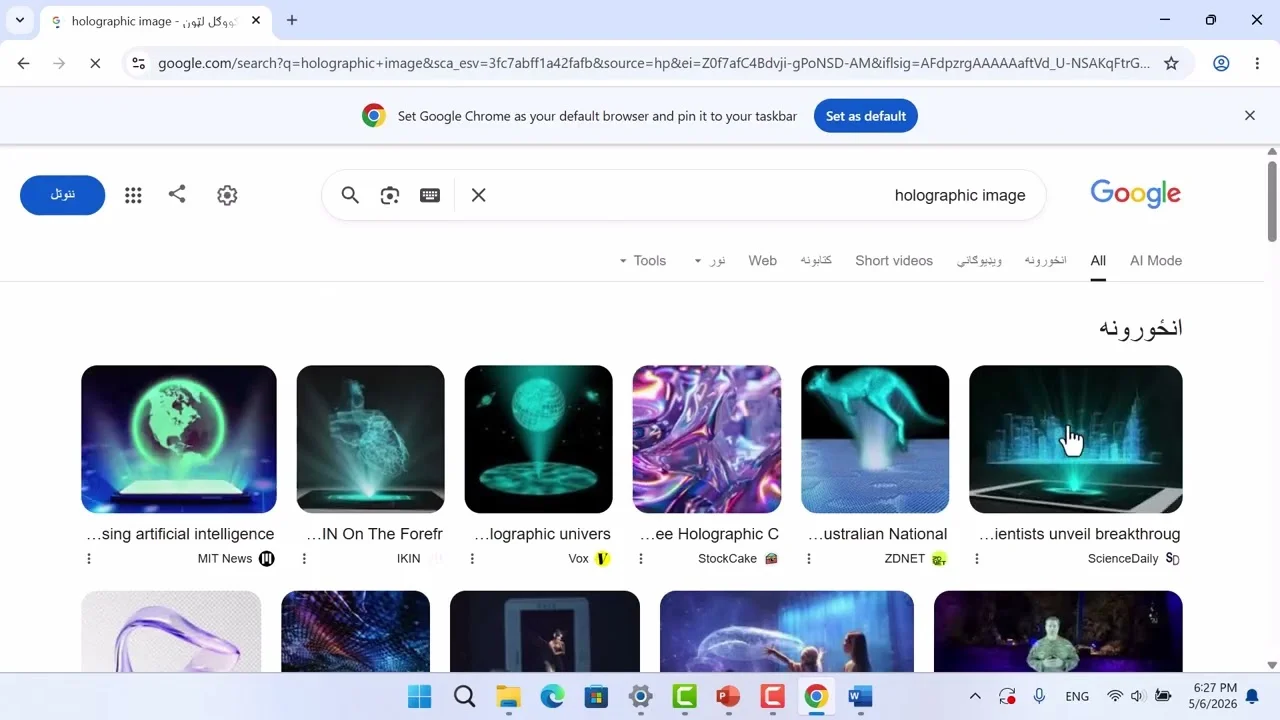
•A hologram is a 3D image created using laser beams and mirrors.•A half mirror splits a laser beam; half reflects, half passes through. The reflected beam hits a mirror and then the object, creating an object beam. The transmitted beam reflects off another mirror to form a reference beam. The two beams recombine to create a hologram.•Holograms appear in movies like Star Wars and Iron Man.•Holograms are used on credit cards, currency, driving licenses, passports, and diplomas because they cannot be copied or scanned fraudulently.•In architecture, holograms provide a 3D visualization of buildings before construction, offering a better view than on-screen simulations.Key Takeaways
•AI has significantly improved translation, making it possible to translate any text, video, or audio into any language.•Spell checkers are integrated into many applications and help identify and correct spelling and grammar errors.•Holograms are created using laser beams and mirrors and appear as 3D images that cannot be touched.•Holographic images are used for security on documents like credit cards and passports because they cannot be copied.Conclusion
Computer-assisted translation tools and holographic imaging are valuable technologies with practical applications in communication, security, and architecture.