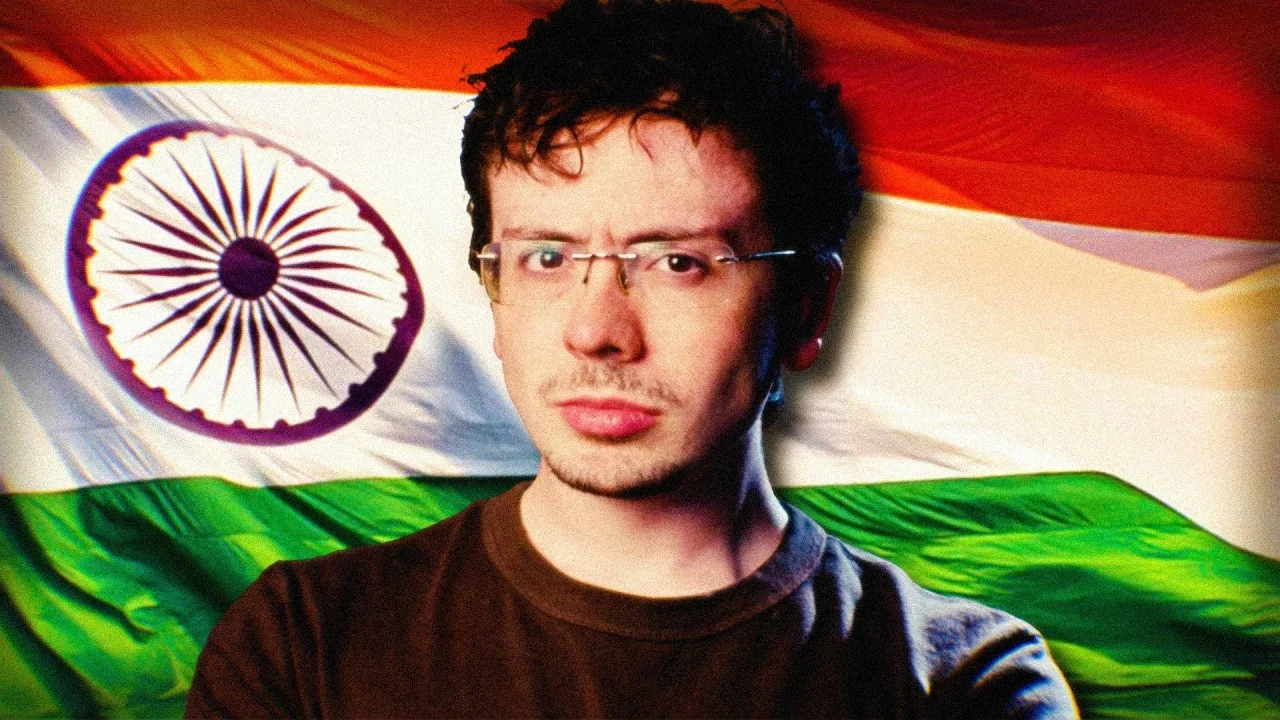
The video examines the rise of anti-Indian sentiment, the historical and social factors behind it, and draws parallels between India and other societies, including the speaker's own Italian immigrant background.
The Indian Paradox: Success, Stereotypes, and the RSS ⏱ 0:00
•Anti-Indian sentiment has become socially acceptable; CNN reported online attitudes spilled into real life, and Ireland saw a documented rise in anti-Indian immigrant violence.•Indian households in the US average $151,000 per year (double the national average), are disproportionately represented among doctors, engineers, and entrepreneurs, yet face negative stereotypes.•The RSS, a Hindu nationalist paramilitary force inspired by the Nazi Party in the 1930s, held a rally for 5,000 people at Madison Square Garden; it is widely reported to be behind Gandhi's 1948 killing and deadly terror attacks on Muslims and Christians.•There are now around 6 million Indians in the US (up from 1.5 million 25 years ago); in 2024 the US issued 86,000 student visas, 150,000 H-1B visas, and 20,000 company transfer visas to Indian citizens (255,000 total).Immigration, Education, and Exploitation ⏱ 7:05
•In 2005, 75% of Americans had a favorable view of India; Indian culture had a strong foothold through Ravi Shankar, Slumdog Millionaire (8 Oscars), and yoga practiced by over 10% of Americans in 2018.•University of New Haven international enrollment grew from 800 to almost 4,000 in 4 years, with 30% of the student body Indian at its peak; in 2022, over 100 young Indian men were found crammed into 5 small apartments near campus.•In Canada, 7% of the population is now Indian (1 in 14 people), expected to rise above 10% in 10 years; at Ontario's Niagara College in 2018, 3,000 of 11,000 students were from India, and more than half of retested students should never have been admitted.•A Hindu temple in New Jersey, built with 68,000 cubic feet of marble and 5 million hours of labor from 10,000 volunteers, was allegedly built using low-caste Indians on temporary religious visas paid a dollar an hour, working 87 hours per week in guarded compounds; the FBI raided it in 2021.Casteism, Inequality, and Scamming: Indian Social Dynamics in the US ⏱ 20:00
•Indian nationals in the US have faced legal consequences for crimes rooted in caste and social hierarchy: an Indian couple in California was convicted of forced labor and sentenced to 15 years each; they had brought workers from India and forced them to work 18 hours a day without pay, and physically abused them.•Caste-based discrimination has been reported in American workplaces: a Vice interview with an Indian tech worker described systemic discrimination from Indian coworkers; thousands of accusations and lawsuits have been filed against companies like Google, Amazon, Apple, Facebook, and Microsoft; Seattle made caste-based discrimination illegal in 2023, and California sued several large companies.•Manual scavenging remains a brutal practice in India: hundreds of thousands of Dalits still clean septic tanks and sewers by hand without protection, and hundreds die each year; it has been illegal for decades but no one has been convicted for hiring manual scavengers, and India's national rail company is the largest employer of manual scavengers.•Scam call centers target Americans: in 2025 alone, Indian call center scams stole almost $3 billion from Americans; only around 150 arrests were made at scam call centers in all of India, while Delhi alone is estimated to have at least 1,000 fraudulent call centers; in one US-based scam, a man collected $200,000 in gold bars from a woman at a nursing home and received 12 years in prison, and another man staged 18 armed robberies to exploit the U visa program and got 2 years.•Indians have a reputation for being difficult in business dealings, often attributed to a cultural enjoyment of haggling; a study titled "Can you do something about the price?" found that Indians haggle for entertainment, not just to get a better price.India as a Low-Trust Society and Its Global Parallels ⏱ 40:00
•India is described as a low-trust society, where civic obligations are widely disregarded; Infosys co-founder Narayana Murthy said Indians are apathetic to the common good, citing littering in public spaces, not repaying loans, and corruption at all levels, and Modi in 2014 called trust India's biggest issue.•Extreme examples include a fake police station operating 500 m from the real one for 8 months, a fake bank branch taking deposits for over a year, miles of train tracks stolen, a 150-ft cell phone tower pulled from the ground, and a 60-ft bridge dismantled in 3 days in 2022 by a crew including a government civil engineer.•The speaker argues this is a societal flaw, not an innate Indian trait: inequality and dysfunction make selfishness the best option, and the same dynamic exists in the West, as shown by the speaker's train encounter with a woman harassing Indian workers.•Despite the low-trust context, Indians are described as friendly, honest, and high-achieving: Indian-origin entrepreneurs co-founded 72 of America's 650 billion-dollar startups (2024 report), own around 60% of US hotels, and second-generation Indians have a college graduation rate over 76%.Historical Roots: Colonialism, Partition, and the Chinese Comparison ⏱ 40:00
•India has a long history of disunity: over 20 separate kingdoms in northern India alone in 1000 AD; the Mauryan, Mughal, Chola, Delhi Sultanate, Sikh, and other empires rose and fell without creating a single Indian national identity; India has 22 officially recognized languages, 99 minor ones, and hundreds of ethnic groups.•The British East India Company arrived in 1608, conquered dozens of kingdoms over 150+ years, and by the 1850s controlled over 80% of the region; after the 1857 uprising, the British Crown ruled India for about 90 years, building 40,000 miles of railways and 250,000 miles of telegraph wires, but also presiding over 12 extreme famines in the second half of the 1800s that killed over 40 million people, including the 1943 Bengal famine (4 million dead).•At independence in 1947, India was extremely poor: only 17% could read in 1950, infant mortality was 1 in 7, and life expectancy was 32 years; British rule spent only around 1.5% of the budget on education in the 1880s and allowed child labor.•China is presented as a parallel: in the 1930s its life expectancy was 30 years, and even Einstein in 1922 described Chinese people as filthy, spiritless, and obtuse; yet China has since grown rapidly, suggesting that negative stereotypes about Indians today mirror past attitudes toward the Chinese. India's post-1950 reforms—including abolishing untouchability, banning manual scavenging in 2013, decriminalizing homosexuality in 2018, and making education a legal right in 2009—have largely failed in practice; 20% of Indians still cannot read, and 342 million lack clean drinking water as of 2024.Hindutva, Caste, and India's Connection to Zionism ⏱ 60:01
•The RSS is not a fringe group but the dominant political force; Modi belongs to the BJP, founded by RSS members, whose ideology is right-wing Hindu nationalism called Hindutva. Hindutva frames India's problems as insufficient Hindu-ness rather than class, caste, corruption, or grotesque inequality, and religious/national unity lets casteism and everyday improvement (institutions, clean cities, schools) be pushed aside while Muslims, Christians, and Pakistanis take the blame.•The speaker argues Hindutva explains why India struggles to change: liberalizing and modernizing is simply not in the Hindutva playbook or agenda, not that India is defective or broken.•Hindutva also explains India's bizarro connection to Zionism: Hindu nationalists see Israel as the country they want India to be — an ancient religious civilization with a powerful military and a defeater of Muslim enemies, hence memes like "I'll protect you, Israel."•The subreddit "Brahman Bros" (with a Z) has rules including number three "no casteism" and number five "respect Judaism," claiming Brahmans and Jews have a special connection due to similar respective roles in society; top all-time posts there are mostly blatantly anti-caste, with a few exceptions.•The speaker says antisocial behavior by immigrants should be admonished no differently than from citizens, but Indian culture's story is not of faulty or bad people — it is a deeply unequal nation where elites lord power over a broken underclass.The Italian Immigrant Parallel and Why Things Change ⏱ 64:08
•The speaker reveals he is Italian, not Indian: three of his grandparents were born in Italy. His great-grandfather Calcedonio Sagio came from Sicily to New Haven, Connecticut in the late 1920s and opened a corner grocery store; his son-in-law William DeMarco, born 1905, grew up in a barn in Sicily and never returned to Italy.•More than 4 million Italians immigrated to the US between 1880 and 1920; the US population in 1880 was only 50 million, so Italians were a huge share. They fled a Southern Italy left impoverished and chaotic by centuries of foreign rule, settling in New York, Chicago, San Francisco, and densest in Connecticut, where the population grew to 16% Italian — suburbs near New Haven remain more than 50% of Italian descent.•More than half were illiterate with no skills, education, money, or English. They were hated worse than Indians are now: the 1890s New Orleans mayor called them filthy, a 1901 Atlantic article complained of riding trains with "semi-barbaric" Poles and Italians, Life drew them as monkeys, and "garlic eaters" or "grape stompers" were slurs. In 1891 a mob killed 11 Italian men in New Orleans — the biggest mass lynching in American history — though none were convicted and half never charged; the New York Times supported it, Teddy Roosevelt called it "rather a good thing," and the Boston Globe ran "New Orleans arose to meet the curse." Italians were lynched in Louisiana, Florida, and Chicago, and in 1916 in New York a crowd of 500 killed an Italian shoemaker.•The speaker's point: that Italians were ever considered unfit for civilized society is now laughable, but not long ago it was the case. He rejects the counterpoint that Italians are white and Indians brown will always matter, citing Hispanic friends who are "basically more American than I am," and argues things change — though some group will almost certainly always be picked on.•Researching via the algorithm led him to the worst videos of garbage, unhygienic food, and dirty streets, including a Chinese bot tweet saying Indians are "by nature incapable of self-governance and hygiene." But his feed changed to videos of large groups of young people cleaning up giant piles of trash across India. If an Indian throwing garbage tells us what all Indians are like, an Indian climbing in to clean it up has to count too.Key Takeaways
•Anti-Indian sentiment has become socially acceptable, with CNN reporting online attitudes spilling into real life and Ireland seeing a documented rise in anti-Indian incidents.•In 2005, 75% of Americans had a favorable view of India, and Indian culture had a strong foothold through figures like Ravi Shankar, the film Slumdog Millionaire winning 8 Oscars, and yoga's popularity.•Indian nationals in the US have faced legal consequences for crimes rooted in caste and social hierarchy, such as an Indian couple in California convicted of forced labor.•India is described as a low-trust society where civic obligations are widely disregarded; Infosys co-founder Narayana Murthy said Indians are apathetic to their duties.•India has a long history of disunity, with over 20 separate kingdoms in northern India alone in 1000 AD, and various empires such as the Mauryan, Mughal, Chola, Delhi Sultanate, and Sikh empires.•The RSS is not a fringe group but the dominant political force; Modi belongs to the BJP, founded by RSS members, whose ideology is right-wing Hindu nationalism.•The speaker reveals he is Italian, not Indian, with three grandparents born in Italy; his great-grandfather Calcedonio Sagio came from Sicily to New Haven.Conclusion
The video explores the complexities of anti-Indian sentiment, caste-based issues, and India's historical disunity, while drawing parallels to the Italian immigrant experience.