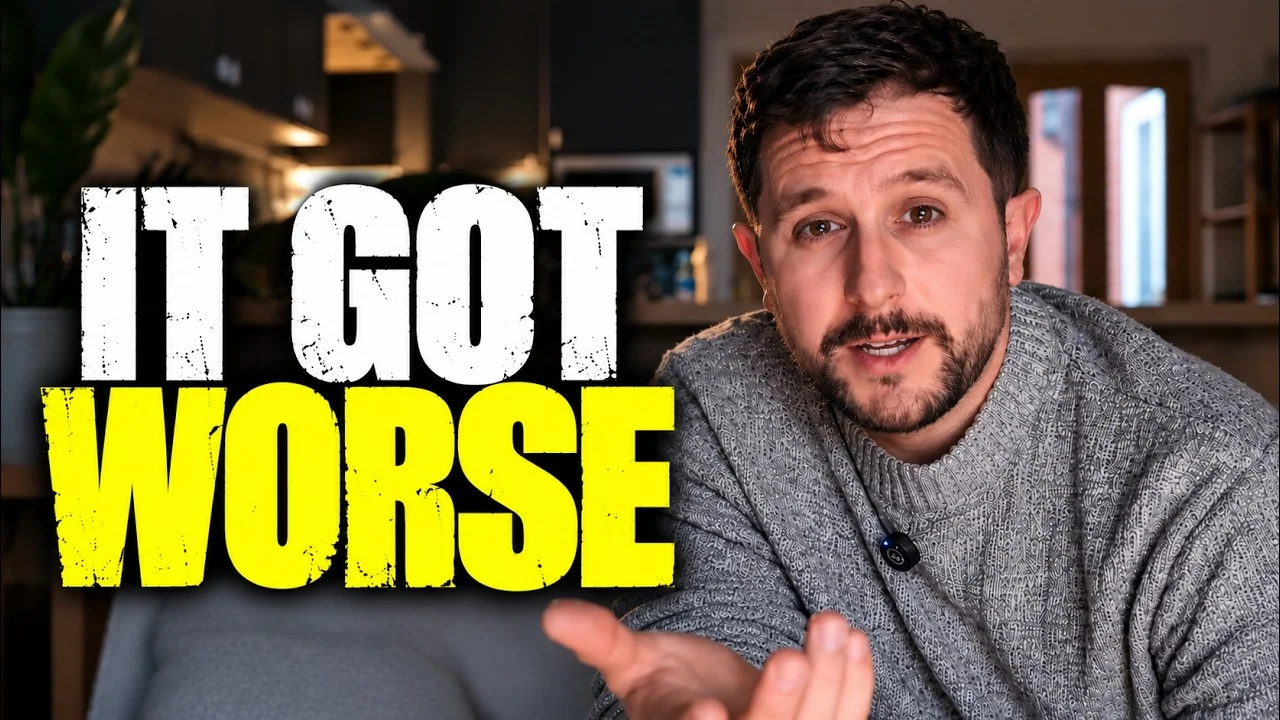
The speaker shares his story of quitting a successful sales career to travel, only to return home after 3 weeks and face a series of setbacks. He reflects on the mistake and offers advice for those considering a similar leap.
The Decision to Quit ⏱ 0:02
•Quit a successful career in sales and bought a one-way ticket to Thailand.•Wanted to stop "working for the man" and live life on his terms.•3 weeks later, he was back home.•Took a string of low-paid jobs, moved back in with his parents in his 30s, and watched his relationship fall apart.•Realized he had less freedom than ever before.Background: From Sales Success to Burnout ⏱ 0:33
•Fell into sales after his cousin recommended a company.•The company specialized in B2C (business-to-customer), with no cold calling.•Turned out he was "pretty damn good at it" and within his first year was in the top 5% nationally.•Earned much more money, moved out of his dad's place, bought a flat and a car, and had a good work-life balance for 4 or 5 years.•Then the company was bought by a private investment company, which shifted the focus to targets and made him feel he had to dodge truths to close deals, making him unhappy.Mounting Stress and the Impulsive Exit ⏱ 2:36
•Had other stressors: converting a disused bar into a house with planning permission issues, and family problems.•Took a new job where he had free rein, but due to poor mental health, he ended up cold calling from home all day.•Found cold calling soul-destroying, being told to "off" by people, and went from unhappy to completely miserable.•Decided the only fix was travel; booked a one-way ticket to Thailand (originally wanted Canada but didn't have the budget).•Boss was understanding; quitting felt like a relief but also risky—he hadn't burned bridges.The Trip and the Aftermath ⏱ 5:40
•Traveled around Thailand for 3 weeks: spent time in Bangkok and on Koh Chang.•Rented a beach hut and sat on the beach for 2 weeks, only to realize all his stresses had come with him.•The job wasn't the problem, so he booked a return ticket home.•Struggled badly upon return; had believed travel would solve everything, but it made no difference.•Lost confidence, especially in sales, and took low-paid agency work (e.g., for the post office) earning far less than his skills could command.•Relationship fell apart; he moved back in with his parents.•Within 3 months, went from a successful but unhappy career to everything falling apart, making much less money and not being any happier.•Quit for more control, but within 6 months felt he had less control than ever.Rebuilding: A Gradual Process ⏱ 9:42
•Learned that change is gradual, not instantaneous.•Took inventory of his current situation (point A): living with parents, exact income, etc.•Created a point B: where he wanted to live, what work he wanted, how much he wanted to earn.•Accepted that the path from A to B would constantly change; halfway to B, he might realize he wants C instead.•Took a lower-paid job as an installer for certain equipment to regain stability.•After about 6 months, his boss suggested returning to sales on the other side of the industry, where he could make 2-3 times as much.•Realized the industry was never the issue; the problem was the other things in his life.•Took the sales job, income doubled, and he could finally get a mortgage on his current place.•Family issues cleared up, and he came full circle back in the UK.Advice for Others Considering Quitting ⏱ 14:17
•If the workplace is toxic and bad for mental health, quitting is okay, but be aware of the financial stress of not working.•Build an emergency fund for a runway to find something else, whether starting a business or changing careers.•Use lunch breaks, mornings, evenings, and weekends to make stepping stones: work on your CV, search for companies, take evening courses to upskill.•Having a safety net makes the hated job more bearable because it's not permanent.•A bad job can make you miserable, but so can not having money, routine, or financial security—weigh these before making a big decision.•If you want to build a business, start it during or outside working hours rather than quitting outright unless the company is already growing and you have a financial runway.•For a career change, prepare to start at the bottom of the pay ladder.Key Takeaways
•Quitting a job to travel can backfire: the speaker returned after 3 weeks and faced low-paid work, moving back with parents, and relationship breakdown.•He had been in the top 5% nationally in sales within his first year but became unhappy after his company was bought and the culture shifted.•Travel did not solve his problems; he realized his stresses came with him and the job was not the root issue.•Within 3 months of quitting, he went from a successful career to making much less money and being no happier.•Rebuilding took gradual steps: assessing his point A, defining a point B, and accepting that the path would change.•He advises building an emergency fund, making gradual changes while employed, and weighing the financial and routine benefits of a job before quitting.Conclusion
The speaker says he would do things differently if he had his time again, making it less stressful, and now feels he has come full circle to make decisions from a more mature and considered place.