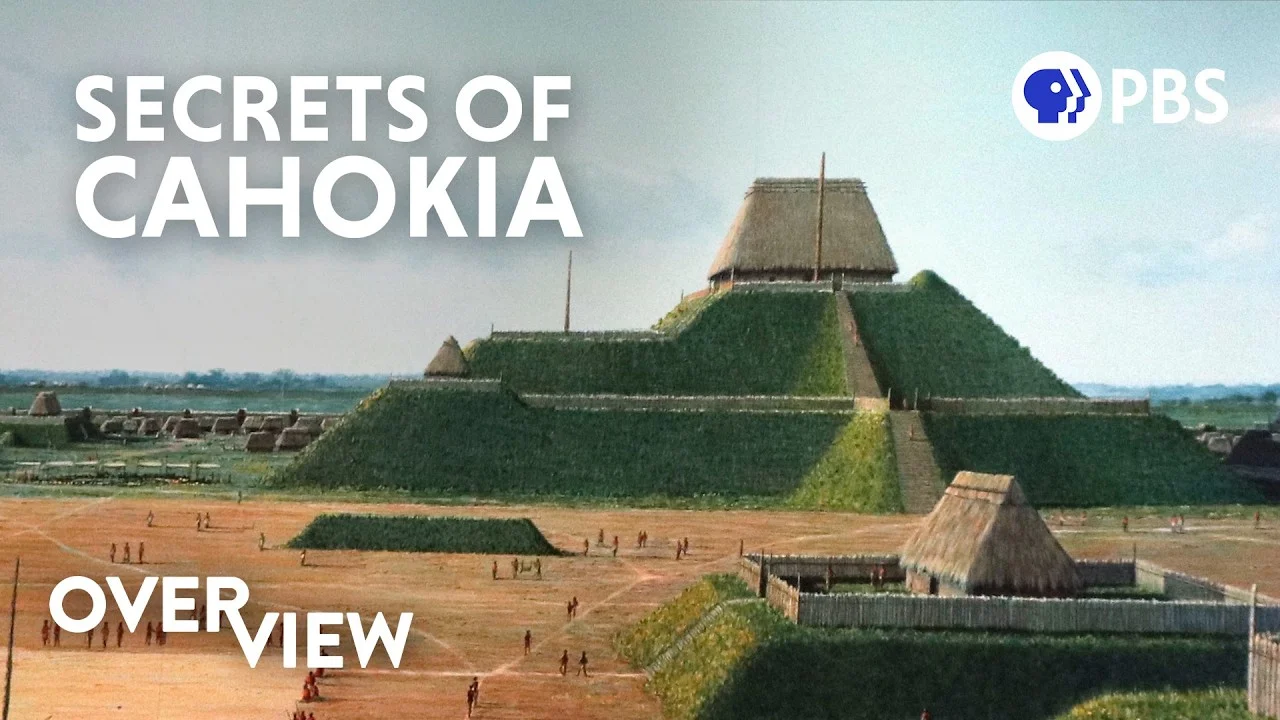
Cahokia, the largest pre-Columbian city north of Mexico, reveals a sophisticated Mississippian civilization that thrived and then mysteriously declined, challenging stereotypes about Indigenous societies.
The Rise and Grandeur of Cahokia
•Cahokia was a bustling metropolis around 1100 AD with at least 15,000 people, rivaling London in size, featuring massive earthen mounds like Monks Mound, which required moving 15 million loads of dirt.•The city had complex urban planning, including neighborhoods, plazas, and a Woodhenge for astronomical alignment, showing advanced Indigenous science and engineering.•It served as a major center of trade, worship, and governance in the Mississippian world, with evidence of social hierarchy and ceremonial activities.Investigating the Decline and Legacy
•By 1250 AD, Cahokia entered decline with no new mounds built and a dwindling population, possibly due to factors like conflict, political strife, or climate changes during the Little Ice Age.•Modern research uses non-invasive technologies like magnetometers to map subsurface features, revealing house basins and urban organization without excavation.•The Mississippian culture evolved rather than vanished; descendants like the Osage Nation trace their heritage to Cahokia, preserving its values and lessons for the future.Key Takeaways
•Cahokia was a highly advanced city with sophisticated urban planning and engineering, challenging misconceptions of Indigenous societies as primitive or nomadic.•Its decline around the 13th century remains partly mysterious, with theories pointing to environmental, social, or political factors, but the culture persisted through descendant communities.•The legacy of Cahokia highlights the resilience and complexity of Native American civilizations, emphasizing living heritage and Indigenous science often overlooked in historical narratives.Conclusion
Cahokia's story reshapes our understanding of pre-Columbian North America, showcasing a thriving civilization whose influence endures through Indigenous descendants today.