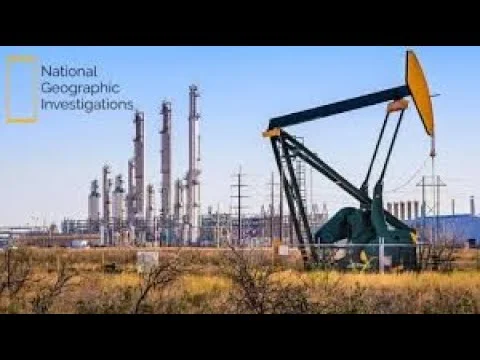
This documentary examines the world's heavy reliance on oil, the science and economics of oil exploration, and the challenges facing alternative energy sources as concerns about peak oil grow. It also explores what experts warn could happen if the transition away from cheap, easily accessible oil is delayed.
Peak Oil and Global Dependence ⏱ 0:03
•The world relies heavily on oil: in the US, 98% of 300 million cars/trucks run on gasoline, nearly 100% of farm vehicles and 99% of railways run on diesel, and all planes use jet fuel.•Experts warn oil is non-renewable and production will peak; a February 2007 U.S. GAO report predicts peak within decades, but no federal plan exists; consequences could include rationing, social unrest, and war.•Demand rises with China and India, while supply decreases; worst case is global recession and military action. Hubbard predicted U.S. peak around 1970 and world peak in early 21st century; U.S. production peaked in 1970 and now produces 8.3 million barrels/day but consumes over 20 million, importing two-thirds.•Alternatives like solar and wind provide less than 1% of energy and produce electricity, not transportation fuel; oil also supplies nearly 50% of energy and petrochemicals for plastics, asphalt, tires, polyester, cosmetics, and pharmaceuticals.Oil Exploration, Alternatives, and the Need for Transition ⏱ 0:03
•Oil formed from ancient organic matter, trapped in reservoirs; seismic imaging helps find it, but exploration remains a gamble. Conventional wells extract only about one third of oil in a field; new technologies can speed depletion.•Saudi Arabia produces over 10 million barrels/day and is the leading supplier; some experts like Matthew Simmons claim it has peaked and inflated reserves from 160 to 260 billion barrels.•The 1973 OPEC embargo caused price hikes, rationing, inflation, unemployment, and recession; Brazil responded by developing sugarcane ethanol, and most of its 3 million cars run on ethanol or gasohol.•U.S. gasoline contains about 10% ethanol, mostly from corn, but it's costly and impacts food supply; experts see it as a temporary fix. Hydrogen fuel cells, used in spacecraft, are a potential clean alternative, and many car companies are investing.Alternative Energy Solutions and Challenges ⏱ 20:06
•Hydrogen fuel cells: demonstration models cost up to $1 million; hydrogen is not an energy source and most commercial hydrogen comes from natural gas.•Hybrid technology: Honda Insight introduced to U.S. market in 1999; plug-in hybrids can go 10-40 miles on electric motor alone; turnover of automobile fleet takes about 14 years.•Electric cars: GM promises production model of Volt within a few years; extra electricity likely from coal, which emits carbon dioxide and mercury; clean coal technology and carbon capture and storage are potential solutions.•Nuclear energy supplies one-fifth of U.S. power and produces no carbon dioxide emissions; solar and wind are the cleanest but will take decades to replace coal.•Conservation is cheaper and faster than research or ramping up alternative energy, but requires drastic lifestyle changes; high gasoline prices motivate conservation and innovation.•There is no one best solution, but a combination of approaches; a comfortable transition now is preferable to a rough transition later.The Future of Oil: Scarcity, Unconventional Sources, and Consequences ⏱ 28:18
•Oil can no longer be counted on as cheaply and easily as in the past; waiting to confirm peak oil means missing the boat and running out the clock.•Deepwater drilling in the Gulf of Mexico: each exploratory well costs $100 million; developing an area could take six years and $6 billion, with potential reserves of 15 billion barrels.•Oil sands in Alberta, Canada: Canada is now the U.S.'s number one supplier of imported oil, outranking Saudi Arabia; but extraction is messy, costly, and environmentally challenging.•Venezuela exports around 2.2 million barrels of heavy oil daily; its reserves could run in the hundreds of billions of barrels.•Oil shale in Colorado holds more oil than Saudi Arabia's total reserves; refining is environmentally damaging and extremely expensive.•Coal-to-liquid technology: the U.S. has massive coal reserves; converting coal to oil is expensive, polluting, and doesn't move away from fossil fuels.•A scenario by 2012: world oil demand jumps from 84 million to 100 million barrels a day; a terrorist attack on Saudi facility Ras Tanura could trigger a global recession worse than the 1930s; oil prices could reach $150 a barrel and $8 a gallon at the pump, with SUV fill-ups costing $200.Peak Oil, Economic Collapse, and the Narrow Window for Action ⏱ 40:06
•Experts warn that peak oil could trigger economic collapse: skyrocketing prices for basic necessities, hunger, disease, crime, mass unemployment, bank failures, stock market crash, homelessness, hyperinflation, riots, and black markets.•Some predict a "Mad Max" scenario where governments consider armed intervention; the U.S. and China have announced they will not be denied access to world oil supplies, and oil-producing nations may defend remaining fields with nuclear weapons.•A narrow window of perhaps 5 to 7 years exists to avert societal clash and implement a massive, globally coordinated "Plan B"; conservation is at least half the solution, and sacrifices are better than war.•The U.S. produces only 8.3 million barrels of oil per day but consumes more than 20 million barrels, importing about two-thirds of its oil (around 12 million barrels of foreign oil daily), transferring wealth to oil-producing countries, some of which are not allies.The Hard Truth About Oil Depletion and Alternative Energy Challenges ⏱ 40:06
•We have not run out of oil, but readily accessible, high-quality, low-cost oil is gone; remaining oil will last another 100 to 150 years but be ever more difficult and costly to extract.•Hubbard's prediction that world oil production would peak in the early 21st century and slide into permanent decline may already be confirmed; we have consumed 1 trillion barrels since 1859, and 1 to 3 trillion barrels remain, but accelerating consumption means the remaining oil may not last as long as what was used.•The quest for new oil is a matter of survival; oil is formed from ancient organic matter and trapped in reservoirs, found via seismic imaging, but extraction is a gamble and conventional wells recover only about one-third of oil in a field.•Alternatives face hurdles: hydrogen fuel cell cars cost up to $1 million and hydrogen is not an energy source; hybrids (like the 1999 Honda Insight) bridge the gap; plug-in hybrids can go 10-40 miles on electric power; and electric cars require more electricity, likely from coal, which emits carbon dioxide and mercury unless carbon capture and storage is used.•Nuclear power supplies one-fifth of U.S. power and produces no carbon emissions but carries risks; solar and wind are the cleanest but will take decades to replace coal; aggressive conservation is the cheapest and fastest way to buy time but requires drastic lifestyle changes.Peak Oil, Energy Independence and the Search for Alternatives ⏱ 60:06
•Brazil's example is cited as what other countries should have done: developing energy sources they controlled within their own borders. After oil prices stabilized in the 1980s and 90s, American consumers lost interest in fuel efficiency, turning to SUVs; with prices rising again and the oil-rich Middle East more unstable than ever, experts ask whether now is the time to expand ethanol use in America.•Ethanol is a high-proof alcohol made by fermenting sugar cane, grains, corn or even garbage, and has long comprised about 10 percent of most U.S. gasoline to prevent engine knock; most U.S. ethanol comes from corn, but it is not cheap to make and can wreak havoc with the food supply. The National Renewable Energy Laboratory is working to bring production costs from about 3.50 cents a gallon down to two dollars a gallon; since ethanol requires so much energy and causes pollution, many experts call it only a temporary fix ("a passionate love affair with ethanol that is a real bad product").•Hydrogen fuel cell technology, used to power spacecraft including the space shuttle, is offered as a clean alternative. In the U.S., 98 of our 300 million cars and trucks run on gasoline, nearly 100 percent of farm vehicles and 99 of railways run on diesel, and all planes fly on jet fuel. A February 2007 U.S. Government Accountability Office report states world oil production is expected to peak sometime within the next few decades, yet the federal government has no plan; consequences could include rationing, social unrest and war, and rising demand from China and India means a crunch.•Oil provides nearly 50 percent of all energy needs and is the basic compound in plastics, asphalt, tires, polyester, cosmetics and pharmaceuticals. In 1956 Shell geologist M. King Hubbert predicted U.S. oil dominance would end around 1970 — a prediction that proved correct: after 1970 U.S. production peaked and has slipped every year. High gasoline prices may motivate conservation and innovation, and there is no one best solution but a combination.•Deep-water drilling in the Gulf of Mexico, 200 miles off Louisiana, targets oil five miles below the ocean floor at wells costing 100 million dollars each, with development possibly taking six years and 6 billion dollars for reserves of up to 15 billion barrels. Canada's oil sands now make it the top U.S. imported-oil supplier, outranking even Saudi Arabia, but it is messy, costly and environmentally challenging; Venezuela exports around 2.2 million barrels daily of heavy oil with reserves that could run in the hundreds of billions of barrels; oil shale in Colorado is "unborn oil" — organic inclusions in rock not cooked into oil.Key Takeaways
•In the United States, 98% of 300 million cars and trucks run on gasoline, nearly all farm vehicles and 99% of railways run on diesel, and oil underpins modern transportation and agriculture.•Oil formed from ancient organic matter trapped in reservoirs; seismic imaging helps locate it, but exploration remains a gamble, and conventional wells extract only part of the oil in a reservoir.•Alternative solutions face obstacles: hydrogen fuel cell demonstration models cost up to $1 million, hydrogen is not an energy source and most commercial hydrogen comes from natural gas, and hybrid vehicles are presented as an interim option.•Oil can no longer be counted on as cheaply and easily as in the past, and waiting to confirm peak oil means running out the clock; deepwater and unconventional sources carry greater difficulty and consequences.•Experts warn that peak oil could trigger economic collapse, with skyrocketing prices for basic necessities, hunger, disease, crime, mass unemployment, and bank failures.•Readily accessible, high-quality, low-cost oil is gone; remaining oil may last another 100 to 150 years but will be ever more difficult and expensive to extract.•Brazil is cited as an example of what other countries should have done: developing energy sources they controlled within their own borders.Conclusion
The documentary surveys global oil dependence, the diminishing prospects for cheap conventional oil, and the technical and economic hurdles facing alternative energy. It closes by highlighting warnings from experts about the consequences of delaying the transition and examples such as Brazil's push for domestically controlled energy.