

Cambridge AS History 9489: Empire and the Emergence of World Powers – Overview
स्रोत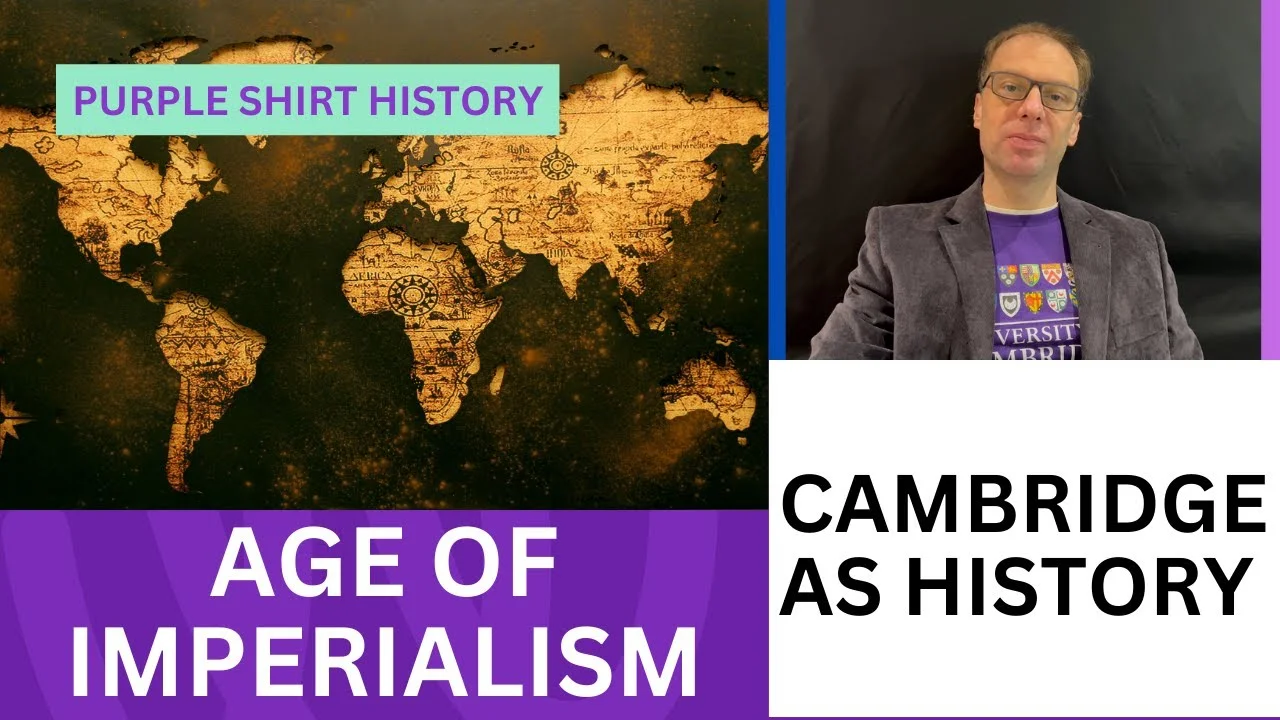
This video provides an overview of the Cambridge AS History 9489 international option, focusing on the first part titled 'Empire and the emergence of world powers,' covering imperialism in Africa and Asia and its effects on Europe and colonized areas.
Recommended Books and Exam Preparation
The speaker recommends the Cambridge-published book 'Access to History for Cambridge International AS Level International History 1870–1945' as a good overview but states that reading it alone is insufficient for top exam marks. Additional books on each subcategory are advised, such as 'The Scramble for Africa' from the Seminar Studies series, which covers major European powers, resources, and motives for colonization. This book also includes documents at the end, which are valuable for practicing the Paper One document question.
Key Topics in the Scramble for Africa
The transcript highlights several key aspects of the Scramble for Africa. The Suez Canal is critical for controlling trade between the Mediterranean and Red Seas, requiring political control of Egypt. West Africa was primarily French, while the British held colonies like Nigeria and Ghana. East Africa saw British control in Kenya and Uganda, aiming for a continuous line from Egypt to South Africa. Cecil Rhodes, a prominent imperialist, is mentioned as a figure symbolizing British ambition. The Boer Wars and the Fashoda Incident are also key events, alongside Germany's entry after the Berlin Conference of 1885, obtaining colonies in East and Southwest Africa.
Four Key Questions for the Subtopic
The video presents four key questions for the 'Age of Imperialism' subtopic: why imperialism was a significant force in late 19th-century Europe, including domestic nationalism and economic/political motives for expansion; the impact of imperial expansion on international relations, with cooperation (e.g., Boxer Rebellion) and tension (e.g., Anglo-German rivalry over the Boer War); Japan's rapid modernization and military development after the Meiji Restoration, becoming a world power while avoiding colonization; and why the USA emerged as a world power, driven by the closing of the frontier, economic growth during the Gilded Age, and the Spanish-American War.
Japan and the USA as Emerging World Powers
The speaker notes that Japan was one of only two Asian countries not colonized (the other being Thailand). Through the Meiji Restoration, Japan transformed from a feudal society to a modern military power, winning wars against China and Russia. The USA's emergence is tied to the closing of the frontier in the 1890s, leading to overseas expansion like the annexation of Hawaii and the Spanish-American War, which was a decisive victory. The US also became the world's largest industrial power, surpassing Britain and Germany, and its participation in World War I further cemented its international role.
Key Takeaways
Conclusion
The video provides an overview of the 'Empire and the emergence of world powers' section of the Cambridge AS History 9489 course, covering the Scramble for Africa, Japan's modernization, and the USA's rise as a world power.
इस वीडियो के बारे में पूछें
विज़ुअल हाइलाइट्स बीटा
 1:40
1:40  6:15
6:15  8:20
8:20 