

World War II in Colour: The Gathering Storm
출처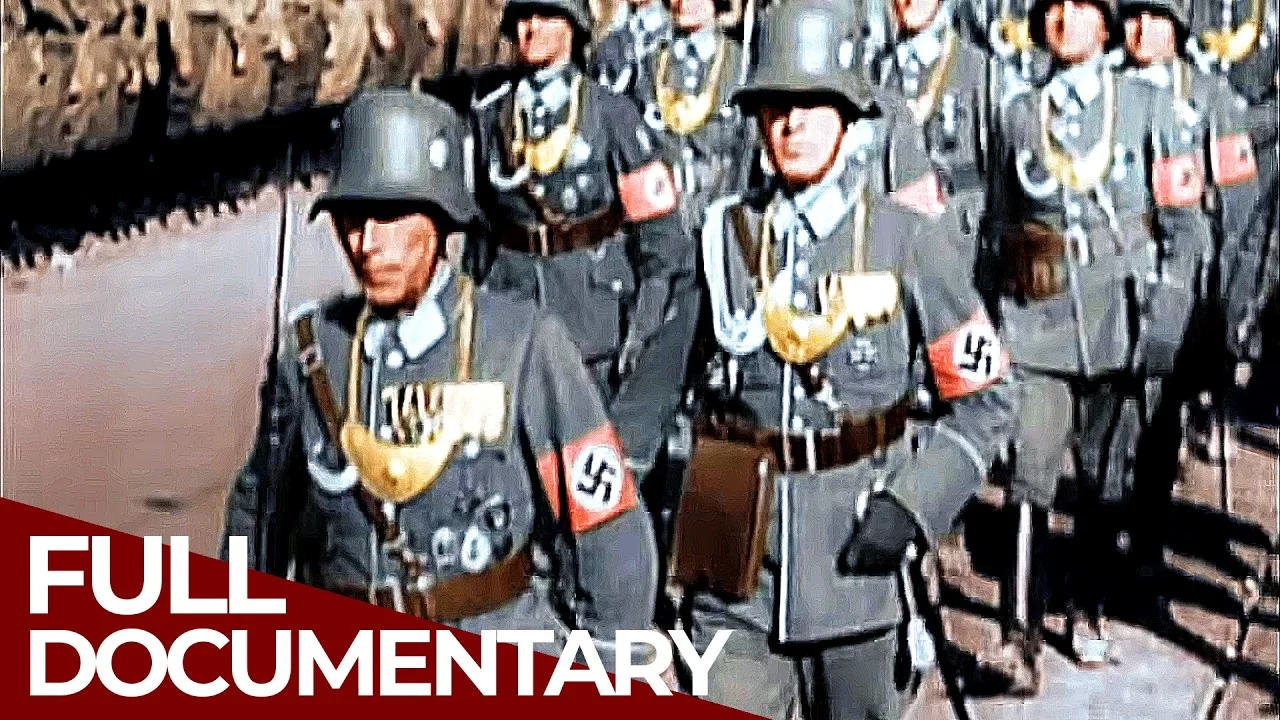
This video covers the events leading up to World War II, from the aftermath of World War I through the rise of Hitler, Japanese expansion, and the failure of appeasement.
The Legacy of World War I and the Rise of Hitler
After Germany's defeat in 1918, a myth arose that the army was betrayed by politicians. The Treaty of Versailles forced Germany to pay massive reparations and reduced its size. The Weimar Republic struggled with hyperinflation and political extremism. Adolf Hitler, a World War I veteran, led the Nazi party, attempting a coup in 1923. After prison, he rebuilt the party and used democratic means to gain power. The 1929 stock market crash caused mass unemployment, boosting Nazi support. In 1933, Hitler became chancellor, then used the Reichstag fire to ban other parties. In 1934, he became Führer, absolute leader of Germany.
German Rearmament and Early Aggression
Hitler secretly rearmed Germany, trebling the army and building the Luftwaffe. In 1935, he openly announced the air force, violating the Versailles Treaty. He then reoccupied the Saarland and the Rhineland, met with no opposition from Britain or France. In 1938, he annexed Austria after sending in troops. Next, he demanded the Sudetenland from Czechoslovakia. British Prime Minister Chamberlain met Hitler twice, and at the Munich Agreement in September 1938, Britain and France allowed Hitler to take the Sudetenland in exchange for a promise of no further territorial demands. In March 1939, Hitler seized the rest of Czechoslovakia, including non-German-speaking areas.
Aggression in Asia and Europe: Japan and Italy
Japan faced economic problems and lacked natural resources. In 1931, its forces seized Manchuria and set up a puppet state. The League of Nations condemned Japan, but it withdrew and faced no consequences. In 1937, Japan invaded China, committing atrocities like the Nanking Massacre, where over 300,000 civilians were killed. The Western powers did not intervene. In Italy, Mussolini's fascist regime sought to recreate the Roman Empire. In 1935, Italy invaded Ethiopia, using gas bombs. The League of Nations imposed weak sanctions, and Ethiopia was conquered. Both Japan and Italy demonstrated the League's impotence.
The Spanish Civil War and the Failure of the Democracies
In 1936, civil war erupted in Spain between the left-wing Republican government and nationalist forces led by General Franco. Hitler and Mussolini sent troops, tanks, and aircraft to support Franco, testing their new weapons. The Soviet Union sent limited aid, but Britain and France adopted a policy of non-intervention. Despite fierce resistance, including from international brigades, the nationalists won by March 1939. The war convinced Hitler and Mussolini that Britain and France were weak, while Stalin became disillusioned with their willingness to confront fascism.
The Path to War: The Nazi-Soviet Pact and the Invasion of Poland
Hitler set his sights on Poland, demanding the return of Danzig. Britain and France now promised to defend Poland. Stalin, frustrated by failed negotiations with the West, signed a non-aggression pact with Germany on August 23, 1939. Secretly, it divided Poland between them and gave Stalin a free hand in the Baltics. Freed from the threat of Soviet intervention, Hitler ordered the invasion of Poland for September 1, 1939.
Key Takeaways
Conclusion
The video covers the interwar period from the end of World War I to the eve of World War II, detailing the rise of Hitler, Japanese and Italian aggression, and the failures of the League of Nations and appeasement that led to the invasion of Poland.
이 영상에 대해 질문하기