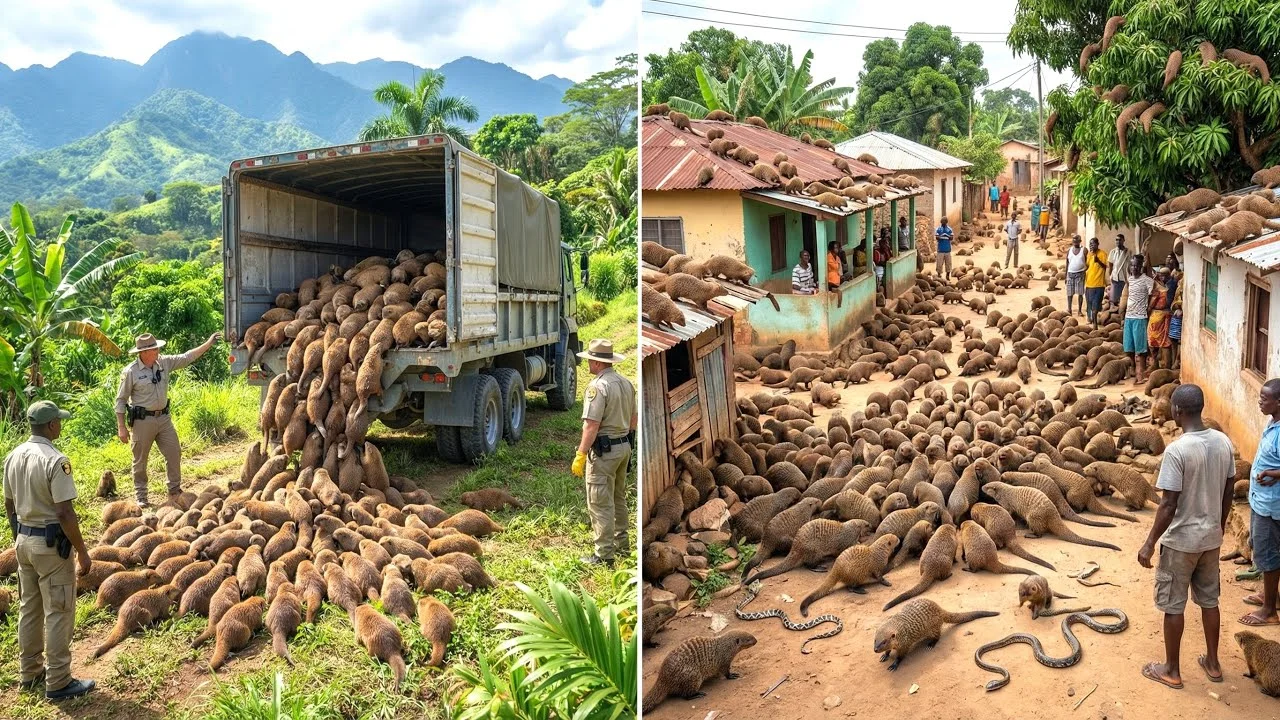
In 1872, Jamaica imported nine mongooses from India to control rats destroying the sugar industry, leading to a catastrophic ecological disaster.
The Problem and Failed Solution
•Jamaica's sugar industry faced plague-level infestations of cane rats, destroying 20-30% of the crop annually.•Plantation owner W. Braftoft Espe imported nine mongooses in 1872, believing they would kill rats as they did snakes in India.•Mongooses are diurnal (active during the day), while rats are nocturnal, so they rarely encountered each other, and the mongooses instead ate easier prey like birds, lizards, and eggs.Ecological and Agricultural Consequences
•With no natural predators in Jamaica, mongooses bred exponentially, reaching an estimated 1.5-2 million across the Caribbean by today.•They drove native species to extinction or near-extinction, including the Jamaican coney, Jamaican iguana, and native snakes, which had actually helped control rats.•Mongooses became agricultural pests, attacking chickens and crops, while the rat problem persisted, and efforts like bounties and poison failed to control their population.Broader Impact and Legacy
•Other islands like Hawaii and Puerto Rico imported mongooses after Jamaica, repeating the same ecological damage.•The introduction caused trophic cascades, affecting pollination, insect populations, and disease transmission, such as increased dengue fever.•Modern conservation efforts include mongoose-proof enclosures for endangered species, but the damage is permanent, and mongooses remain a pervasive invasive species.Key Takeaways
•Mongooses failed to control rats due to mismatched activity patterns, instead devastating Jamaica's native wildlife and causing extinctions.•The lack of natural predators allowed mongooses to multiply into millions, becoming a worse problem than the original rat infestation.•This disaster highlights the dangers of introducing non-native species without understanding ecosystem complexities, a lesson often ignored globally.Conclusion
Jamaica's mongoose introduction serves as a cautionary tale of unintended ecological consequences that continue to affect the island today.