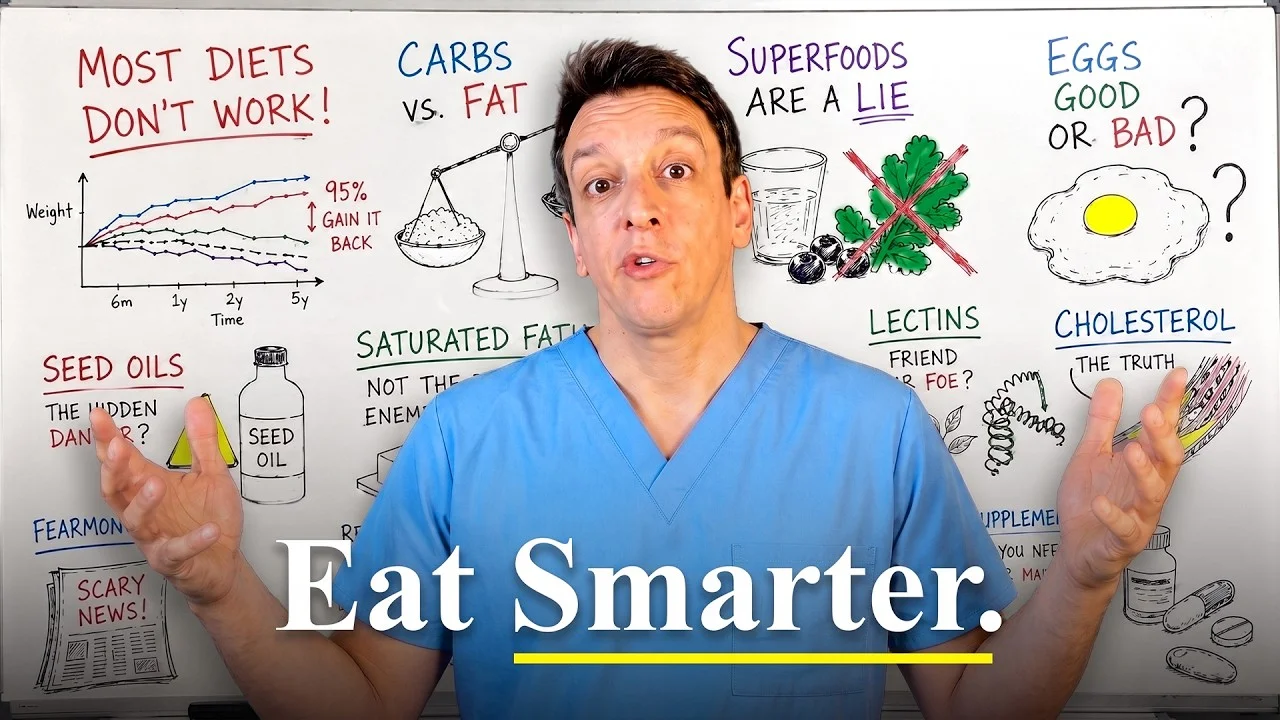
After 30 years studying medicine, biology, and nutrition, I’ve distilled the field into five simple principles that cut through contradictory advice and fear-mongering. These principles help you judge nutrition claims instantly and build healthy, delicious meals without stress.
Principle 1: Look at the Whole Elephant ⏱ 1:32
•A food is a combination of many nutrients and components packed together in a specific structure, each with separate effects on health.•For example, an avocado contains fat, vitamins, minerals, zeaxanthin (promotes eye health), and scopoletin (anti-cancer activity).•An apple contains quercetin (fights inflammation), anthocyanins (promote heart health), vitamins, and different types of fiber.•Even olive oil contains vitamins, carotenoids, phytonutrients, and oleocanthal (anti-inflammatory).•Trying to guess a food's health effect from one isolated nutrient is like the blind men and the elephant—each grabs a part and misses the whole.•Beans contain lectins, but also minerals, fiber, and phytonutrients; studies show better blood sugar control, lower cholesterol, weight loss, less heart disease, and longer lives in people who eat more beans.•Cooking beans wipes out lectins, so normal processing solves the problem.•Oats contain phytates, glyphosate, and avenanthramides, but hundreds of studies show lower blood pressure, lower cholesterol, less body fat, and lower diabetes risk.•Carbohydrates and fats are neither good nor bad; it depends on the food they come in. Whole carbs like fruit, vegetables, and legumes have good health effects; refined carbs like soda, gummy bears, and muffins have not-so-good effects.•Saturated fat is neither good nor bad; salmon, yogurt, kefir, dark chocolate, and olive oil contain saturated fat and have positive health effects, while large amounts of butter, tallow, and coconut oil show concerning effects.•Canola oil has omega-6s, hexane, and double bonds, but dozens of human studies show better blood work, lower cholesterol, lower triglycerides, less liver fat, lower risk of dying from heart disease or cancer, and lower overall mortality.•Protein debates miss the point: most Westerners already get plenty of protein; lack of protein is not an issue in the standard Western diet.•Good health effects are seen with fatty fish, fermented dairy, legumes, and nuts—some from plants, some from animals—so it’s not about choosing a team.•Even fiber’s benefits come from the foods that contain it, not from any food with added fiber.Principle 2: Personalize for Specific Conditions ⏱ 11:44
•Some people have specific conditions and intolerances and need to personalize their diet, but that doesn’t apply to all of humanity.•Gluten intolerance and celiac disease affect a small minority; they don’t apply to 99% of humans.•Oxalate kidney stones affect a subset of people; for those individuals, specific strategies are needed, but the vast majority don’t need to worry about oxalates.•GI conditions like IBS and IBD require personalized strategies, and some intolerances can sometimes be reversed.•Egg cholesterol response varies: some people see sky-high cholesterol, but most see a modest increase of about seven points.•Salt sensitivity varies: some people’s blood pressure spikes with more sodium, others are more salt tolerant.•Glucose spikes are a concern for people with conditions like diabetes, but not for healthy people.•Fear-mongering relies on you not understanding these principles, because fear triggers clicks and purchases.Principle 3: Acute vs. Chronic Changes ⏱ 15:19
•Your body is in constant motion (homeostasis): blood pressure and heart rate rise during exercise; triglycerides rise after eating fat; blood sugar rises after eating carbohydrates.•These are temporary acute changes, not disease.•The problem is chronic exposure: high blood pressure all the time (hypertension), high triglycerides even when fasted, high blood sugar even when fasted.•Don’t fall for the switcheroo: a blood test going up after an activity is not the same as that value being high all the time in the context of disease.Principle 4: Compared to What? ⏱ 16:22
•Everything in nutrition is instead of what? Stop thinking of foods as good and bad, superfoods and poison.•Any food can be made to look good or bad depending on what you compare it to.•Large studies show that comparing butter to white bread or muffins yields little difference in heart disease, but comparing butter to olive oil, brown rice, or steel-cut oats shows less heart disease.Principle 5: Consistency Over Perfection ⏱ 17:23
•Your health is determined by the foods you eat consistently, not something you do occasionally.•It’s not about being perfect; it’s about most of your diet being healthy foods.•Having potato chips once in a blue moon or ice cream on the weekend is fine; the problem is eating that stuff day in and day out.•The real currency of nutrition is dietary pattern, more so than isolated foods.•The traditional Mediterranean diet has the most evidence: less heart disease, less diabetes, less of some cancers, less mortality, even better mental health.•It’s basically fruits, vegetables, legumes, whole grains, olive oil, fish and seafood, some dairy, lean meats, and low in ultra-processed junk foods.•It’s a general reference, not a strict menu; personalize it as needed.•Most healthy adults on a diverse diet get all nutrients they need and don’t need supplements, but vegans need a source of B12, and those avoiding fish, seafood, dairy, and salt may need iodine.•Eat to your blood work and tests: get blood analysis, measure blood pressure, look in the mirror, and adjust.Key Takeaways
•The health effect of a food comes from the combination of its many components, not from one isolated nutrient.•Specific conditions like celiac disease, oxalate kidney stones, and diabetes require personalized strategies, but these don’t apply to most people.•Acute changes like blood sugar spikes after a meal are normal; chronic elevation is the real concern.•Always ask 'compared to what?' because a food’s health effect depends on what it replaces in the diet.•Consistency matters most: a healthy dietary pattern like the traditional Mediterranean diet, followed most of the time, determines health outcomes.Conclusion
By applying these five principles, you can cut through nutrition confusion, judge claims instantly, and enjoy food with peace of mind.